City leads way in support for start-ups
Updated: 2013-03-08 07:31
By Zheng Yangpeng in Beijing and Li Yu in Chengdu (China Daily)
|
|||||||||||


|
Chengdu Hi-tech Zone provides direct funding as well as other services, such as realty management and talent hiring, to enterprise that have settled there. Provided to China Daily |
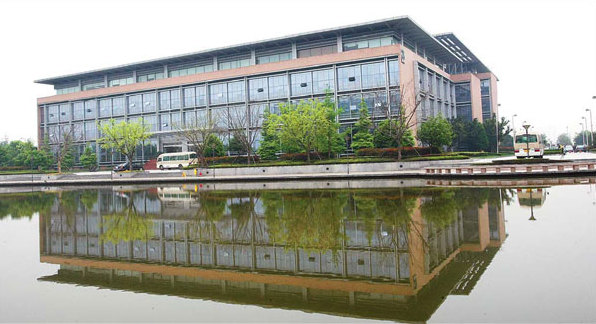
Hi-tech zone helps enterprises grow with financing and service platform
At the beginning of 2009, Liu Jia's entrepreneurial venture seemed to be stuck.
The company he owned together with four partners, GoodTeamStudio, a mobile game developer, could not pay their employees' salary because they could not make a profit on their new game.
"We had been too optimistic about our entrepreneurial prospects. But reality told us we were wrong. Downloads of our game were so small," Liu said.
Liu and his partners had worked together at a company specializing in embedded software development. In 2008, they realized the exciting potential of the Android market. They left the company with a dream to become China's best Android games developer.
Their game idea was good so were their products, except for one thing: their market was too small, Liu said in hindsight.
By the end of 2008, Java and Symbian system still dominated the market and there were only about 200,000 Android game users worldwide.
Liu was facing a sink-or-swim battle when a loan from the Chengdu government kept the company afloat.
The following years have seen an explosive growth of Liu's business as smartphone and Android system became increasingly popular. Downloads of the games developed by GoodTeamStudio began to rise. Liu was able to repay the loan and turn a profit.
Like GoodTeamStudio, financing is an ongoing headache for numerous Chinese IT start-ups. Often, their technology is too avant-garde for the market, but the technology reflects the trends of the industry and has great growth potential.
In the eyes of Tang Jiqiang, director of Chengdu Hi-tech Zone's strategic development planning bureau, this is a problem the government has to help tackle.
Tang said a typical hi-tech company experiences four phases - seed, expansion, maturity and decay. Every phase requires targeted financial support.
For seed companies, Tang said a free office space with an Internet connection is enough. Chengdu Hi-tech Zone now offers this service. As companies grow bigger, they may face financial bottlenecks. This is when the government or venture capitals should play a role.
But profit-oriented agencies such as venture capitals and private equities also have their limits. Some of the start-ups are too risky for them, or in the case of GoodTeamStudio, wouldn't like to be invested by VCs and PEs. In this regard, Chengdu Hi-tech Zone set up an 80 million yuan ($12.8 million) special government fund in 2012 to offer financial support to them.
Besides direct funding, the zone also offers subsidies to PEs and VCs that invest in enterprises in this zone. As Tang said, market forces still have to play the major role.
Financing is only a part of the Chengdu government's support to hi-tech enterprises. Other supports include realty management, talent hiring, collective promotion and infrastructure.
For example, Liu's company could have spent a few thousand yuan to join the collective hiring group organized by the zone. If the company carries out their own campus hiring campaign, it could cost them much more money.
Chengdu Hi-tech Zone also invested hundreds of million of dollars in building a public technology service platform which all enterprises in the zone can access.
"In many local industrial zones, governments only care about how many companies they can attract. But here, we try our best to perfect the service after enterprises settle here," said Tang.
Various service measures have been successful. The revenue of Chengdu's IT industry was projected to surpass 300 billion yuan in 2012, becoming the largest sector in the city's industrial economy, according to Chengdu Municipal Commission of Economy and Information Technology.
A common problem for local economic development is lack of coordination. Eager to boost GDP and investment, many local districts scrambled for large projects by lowering their prices to an unreasonable level. To avoid the vicious competition, the Chengdu government clearly planned every function of the districts under its administration.
For example, the west wing of Chengdu is designed to develop hi-tech and emerging industries, while the east wing is designed to focus on high-end manufacturing such as the automobile industry. The southern outer ring is reserved for the development of modern agriculture.
Districts that attract enterprises that are not in line with the district's function will be punished, while those that voluntarily introduce enterprises they attract to other, more suitable, districts may get merits.
"We've got a stick as well as a carrot for district governments," Liu Jianing, an official from Chengdu Investment Promotion Commission said.
Chengdu has now completed the layout design of its future development, which highlights the modern service industries in the downtown area, east and west wings, the Tianfu New District to the south of the city, and six suburban areas, each with their own specialized function.
"We believe that the scientific design will lead to healthy industrial cluster effect, which is key for Chengdu to become an industrial hub," said Liu.
Contact the writers at zhengyangpeng@chinadaily.com.cn and liyu@chinadaily.com.cn
(China Daily 03/08/2013 page15)







Hot Topics
CPC National Congress,Mo Yan, Bogu Kailai, Diaoyu Islands, iPhone, Yao Ming, Sun Yang, Li Na, Liu Xiang, shenzhou, taiwan, hiv, school bus, house, hk, rare earth, food safety
Editor's Picks

|
|

|

|

|

|