Ginseng tradition alive in Wanliang center


|
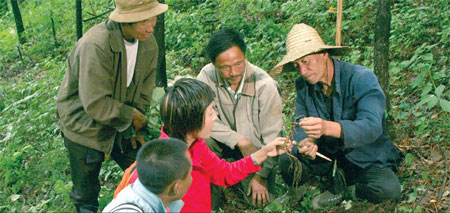
Visitors and ginseng-diggers examine wild ginseng in the Changbai Mountains, an ideal place for ginseng growth due to its suitable temperature and climate. Xiao Ming / for China Daily |
|
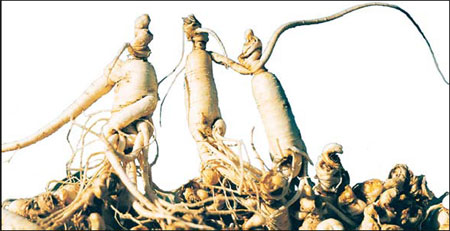
Ginseng roots from Jilin province. The local government has increased its investments in the production of green, high-quality ginseng. Xiao Ming / for China Daily |
|
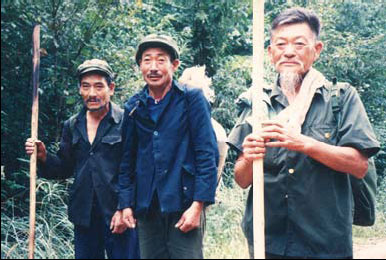
A three-person team sets out to dig for ginseng. Provided by Cao Baoming |
54,000-square-meter base provides commercial platform for popular root
Wanliang's ginseng center in Northeast China's Jilin province is well known as a producer of one of the finest varieties of the root in the country.
The 54,000-square-meter trade center in Fusong county, Baishan, Jilin province, is said to be the largest of its kind in the world. Built in 1989, it has retails shops, exclusive outlets and small stalls offering the same commodity. The center even has enough space to hold ginseng exhibitions.
People can buy all kinds of ginseng there, ranging from delicate packages of dried ginseng to roots that have just been dug up. There is also ginseng in glass bottles that is immersed in a liquid.
The trade center moved around 40 million kilograms of fresh ginseng worth about 2 billion yuan ($314 million) in 2010, and dried ginseng had a sales volume of 10,500 tons, worth 3.1 billion yuan. Moreover, it also traded 500 million yuan of rare varieties of ginseng in 2010.
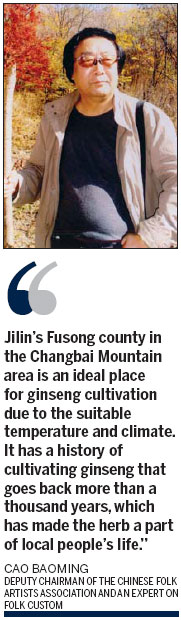
Dubbed the "king of herbs", ginseng is considered to have great nutritious and medicinal value in Chinese medicine. It is an ancient natural species, the existence of which predates mankind's arrival on the planet, said Cao Baoming, deputy chairman of the Chinese Folk Artists Association.
"Jilin's Fusong county in the Changbai Mountain area is an ideal place for ginseng cultivation due to the suitable temperature and climate. It has a history of cultivating ginseng that goes back more than a thousand years, which has made the herb a part of local people's life."
Cao described Fusong as a museum of ginseng culture because of the diversity both in shape and species. Some have leaves or roots shaped like animals or humans, such as the precious "three generations" ginseng. It consists of three small parts shaped like men at different ages: a grandfather, father and grandson.
When people dig wild ginseng in the mountains, they must follow a series of rules made by their ancestors, said Cao, who is also an expert on folk custom.
"First, is to gather a team. Otherwise, a single ginseng digger will most likely get lost in the deep mountains. And it should be made up of an odd number of members, leaving room for ginseng, which is regarded as a person. If the team contains an even number of members, that indicates their efforts for ginseng will be in vain."
According to tradition, the team will build a shrine for the Mountain God who, according to legend, was also a ginseng collector that got lost and died on the mountain, Cao said.
"Ginseng diggers worship the god devoutly and believe he will protect them because they are his successors," he said.
While they are scouring the mountains, the foragers' rules prohibit talking loudly, sitting on stumps and hunting tigers and snakes in order to avoid disturbing the god, occupying his seats or hurting his pets, Cao said.
Once they find ginseng, they will circle it with red rope because ginseng roots are thought to be magical creatures, and collectors believe red rope prevents them from disappearing. The finders will also celebrate by cooking a pig shared with all the villagers upon their return.
Cao said these folk customs may seem superstitious, but most actually can be explained by science and summed up from practices.
"The red rope, for instance, helps keep the eye from getting fatigued by looking at green plants for a prolonged period of time," Cao said.
Because Chinese people are paying closer attention to keeping healthy, the ginseng industry has got a strong support from the local government. People have abandoned the old way of cultivating ginseng, which leads to deforestation, in favor of a more sustainable method.
In addition, scientific innovations are being encouraged to develop more processed ginseng products, Cao said.
haonan@chinadaily.com.cn
(China Daily 03/26/2012 page12)