






-
 Barbara HallangerLanguage teacherSince I first stepped foot in China in 1992 I have noticed many changes. There are more automobiles on the road than ever before but fortunately the highways have improved. There used to be far more bicycles and small, rickshaw-like carriers, except they were motorized. I still see them on occasion, but not nearly as many as before. Another big change is that the hospitals have improved drastically, at least the ones that I have visited. When I went for my first medical checkup back in '92, nobody at the hospital spoke English and it was not a pleasant environment. More
 -
 Li RanPh.D Candidate, National School of DevelopmentPremier Li Keqiang cited reforms as "powerful impetus" yesterday in a government work report. "Deepening reform" is enjoying high priority and they are just around the corner, or actually, on their way - a grant reform plan was launched last November at the third plenary session, including about 330 measures in 60 areas. But maybe less attention is paid to implementation sequence of reforms, which may contribute to the collapse of the whole reform program if not appropriately dealt with. More
 -
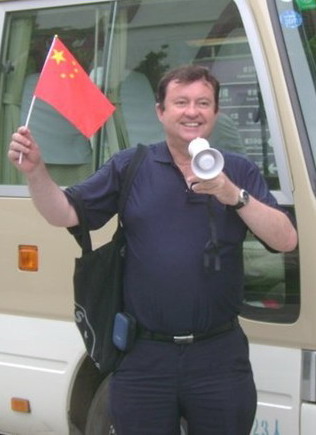 Colin SpeakmanEducator and economistA very big change has been high-speed trains. In 2003, I traveled from Shanghai to Nanjing in a soft seat on a train that took over 4 hours. Fast forward and I regularly took D trains that could make the journey in 2 hours. Then the super-fast G trains arrived, cutting the journey in half again. So nowadays just 1 hour to connect Shanghai with Nanjing and 5 hours to connect Beijing with Shanghai by train (before, around 11 hours) – and China now has the largest network of high-speed trains in the world - amazing! More
 -
 Louis KuijsChief China economist at Royal Bank of ScotlandIn the government's terminology, fiscal policy will remain "proactive" and monetary policy "prudent" in 2014, although these labels do not say much about the actual stance. The government's budget aims to keep the official fiscal deficit unchanged at 2.1 percent of GDP. The total fiscal deficit, including the borrowing by local governments from banks and the shadow banking system, is likely to be substantially higher, as it was in recent years, but it is hard to know how high. More
 -
 Mark WilliamsChief Asia economist at Capital EconomicsIn delivering the government work report at the National People's Congress, Premier Li Keqiang vowed to push ahead with the reforms outlined at the Third Plenum last year. There are strong signals on continuing financial reforms, including the mention of the launch of a deposit insurance scheme this year, on tax reforms and on further reduction of red tape. But Mr Li nonetheless left key questions unanswered. Most notable is the issue of how the government will resolve the tension between its promise to steer the economy onto a more sustainable path and its lingering desire to sustain rapid growth of GDP. More
 -
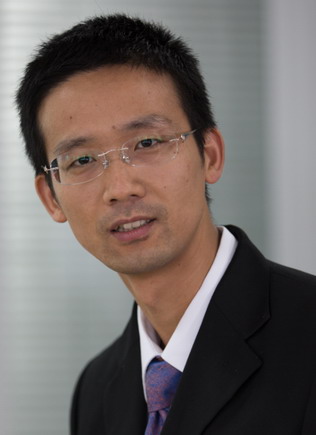 Wang QingfengScholar at the Nottingham University Business School ChinaIn his government report, Premier Li also introduced some practical measures to curb and ban officials' conspicuous spending, such as strictly banning construction of new government buildings. Corruption is deeply rooted in the Chinese culture and is well documented in Chinese history. It will never be easy to tackle corruption, but it requires determination and perseverance of the leadership to get to the heart of the problem and to build a systematic approach that could address the problem. More
 -
 Wang DailiPh.D Candidate, Peking UniversityThe authority has been working with due diligence in addressing the public appeal and fighting the exacerbating air condition. At the opening of the 2014 annual meeting of parliament, the so-called two sessions, Premier Li Keqiang gave an excellent speech and declared “a war against pollution,” much like the “war against poverty”. Tons of research has been conducted to explore the origin of haze: fueling coal, running cars or carelessness in dealing with industrial pollution. More
 -
 Eric EnglandEngineer, UKChina has changed so fast that it is hard to know where to start. I came to China in 1994 and have been here ever since, so I have seen the change. Take one city, Shenzhen, when I first saw this city it was filled with beggars and lots of low buildings, many of these buildings had tin shacks on top of them. There were no birds and little wildlife, it was like entering a different planet, but 20 years on, and Shenzhen is an ultra modern city with huge high rise buildings and a stock exchange, also a very large shipping industry, and of course, a large offshore oil and gas industry. More
 -
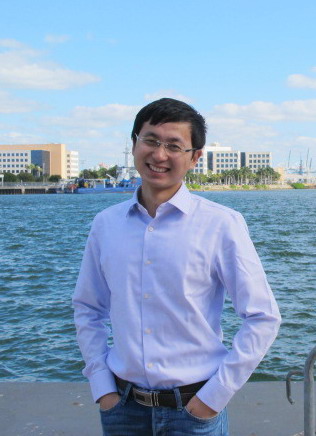 Zhang ChunmanPHD student in Johns Hopkins UniversityBy any standard, China's economic performance over the last three decades has been impressive. That being said, China's economy per se is not without structural problems and vulnerabilities. China's GDP growth rate are 8.7%, 9.2%, 9.2%, 7.8%, 7.7% from 2009 to 2013, respectively. It seems that China is shifting from a high growth rate stage to a moderate one. Does this suggest a gloomy future for China? The answer is no. According to economist Yifu Lin, China has the potential to keep an 8% growth rate in the next two decades. But the question is how to develop China's potential? This is a main task for China's new leadership. More
 -
 Cesare BajAviation historian and author, ItalyChinese leaders are demonstrating a high level of skill in managing the most populated country in the world. The success of their policies in the last decades is evident and a demonstration of what means to have 5000 years of history in one's back. China is able to demonstrate its force, dosing it wisely according to the situations. And it is able to have a long view, for example in its committment in Africa, something that countries managed by 4-5 years lasting administrations are unable to do. China is a modern society, projected to the future. You read this in the eyes of all young people you meet. Just some adjustments are needed. More
...
Copyright 1995 - . All rights reserved. The content (including but not limited to text, photo, multimedia information, etc) published in this site belongs to China Daily Information Co (CDIC). Without written authorization from CDIC, such content shall not be republished or used in any form. Note: Browsers with 1024*768 or higher resolution are suggested for this site.
License for publishing multimedia online 0108263 Registration Number: 20100000002731 