Embracing the past shows way forward


 |
|
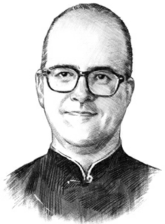
Petko Hinov, Bulgarian Sinologist and translator [Photo/China Daily] |
Winner of this year's Special Book Award for his contributions in bringing Chinese masterpieces to Bulgarian readers.
What do you feel has been China's biggest achievement over the past five years? What's the most notable change you've observed?
For me, that is China's gradual return to herself-embracing her own traditional culture (represented in society by Confucianism), employing her own resources, and trying to increase the consciousness of her own value and worth as an ancient civilization, without arrogantly insisting on her exclusiveness and "divine right" to be the leader of the world. Modernization, but with moderation.
At the same time, I am worried by Chinese society's indiscriminating leap forward to nontraditional values: the precipitate imitation of US culture and the infusion of a way of thinking, incompatible with the traditional Chinese mind. I guess, no modern nation can escape that. Culture is a source of domination and power, but I would rather prefer that to be higher culture and not vulgar pop culture.
I believe that in culture, unlike in technology, innovation is not to be introduced hurriedly and without considering the changes it could germinate in a nation's mind. The consequences of such precipitation are often fatal, and I understand China's policy of limiting, rather than letting, all the internet-dominated world inside her home.
How do you view China's role in today's world?
First of all, I strongly hope China is going to be a cultural force that could bring peace and moderation in a world gone mad with extremes, greed and immorality, and overarmed to the brink of self-destruction. I want to believe China will be the peaceful force that could "save" the world from these ruinous tendencies. What is important for any great civilization is the sacred spiritual heritage that it bequeaths to the world, and not simply being a great power-invincible and oppressively strong.
Do you believe that some of China's experiences or practices could be used to solve pressing global problems? If so, what are they?
For me, the most valuable idea in China's political wisdom is meritocracy: the rule of educated and virtuous people. In my traditional culture, such values as modesty, temperance, humility, love of knowledge and inner purity are the core values of any good cause and good ruling. I am comforted that the same values apply in Chinese social culture since ancient times.
Most global and domestic problems stem from greed and immorality. Many of those values have almost entirely disappeared from the Western world. We should try to employ the principles, expressed in classical Chinese books.
Why are you devoted to research on China? What draws you to what you're doing?
My Chinese story begins in 1988, when I got my first impression of China from Jet Li's famous movie Shaolin Temple. But before that, I already had sensitivities and a mindset, which brought my heart closer to China and the Far East than to what we know as modern Western civilization. Even before that, I was drawn to classical and ancient cultures. The simplicity and depth of classical Chinese music and painting, the sense of harmony and beauty, already lost in the Western world, the art of building and gardening, along with the inborn aspiration to be one with nature, to flow with nature and not against it; and the ethics of modesty, moderation and charity.
Who is your favorite Chinese author, or what is your favorite book by a Chinese author, or about China? And why?
They are so many. Cao Xueqin comes first, with his extraordinary sensitivity for language and the human heart and nature. Classical Chinese poetry and prose. The Confucian classics. I do not limit my love of Chinese books, although it is hard for me to read modern authors-not difficult, but hard-because they lack the perspicacity, brevity and concentrated beauty of the old authors' minds.
Above all, in Chinese books I seek beauty and wisdom, and inner peace. I seldom find these in modern books. I have a hermit's heart. Moreover, I want to know about all the great and not so great books of China. As for the reason why-this is my destiny; this is my love.
- Progress Points: 19th CPC National Congress
- Meet the press: CPC congress through foreign lens
- Why the world is enchanted with CPC Congress
- Russia's Putin hails 'open' CPC congress
- CPC National Congress important: Luxembourg prime minister
- 19th CPC congress marks new historic starting point: US expert
- All Chinese people take great interest in the 19th CPC National Congress