The most vital lesson: Teach students to live
 |
|
A freshman of Central Academy of Drama registers on the first day of school in Beijing on August 24, 2017. [Photo/IC] |
"Teach me, brother, how to live." This line from Colum McCann's Let the Great World Spin should be a footnote to what is the most important education for Chinese students.
After the high-stake gaokao (college entrance examination), new students in college face a new test: surviving on their own, away from dads and moms. The new independence may be a blessing or a curse based on how well their parents have prepared them for the new test. In the excitement for new beginnings, opportunities and friends, some students are annoyed to attend to mundane tasks such as washing dishes, doing the laundry or finding their own bus schedules to commute.
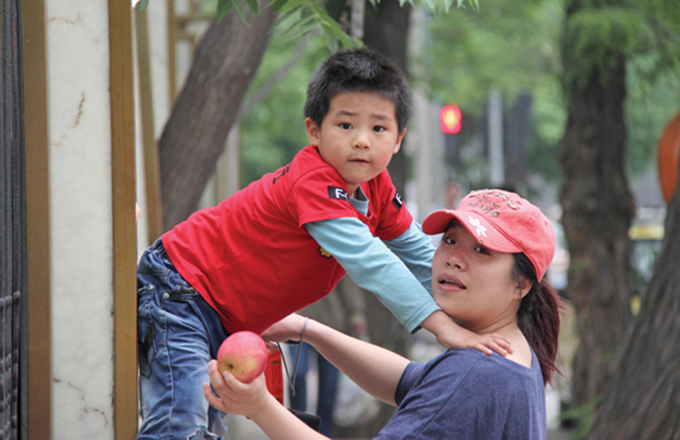
These seemingly petty tasks used to be performed by parents, grandparents or nannies who unwitting created a buffer between the children and life while they focused on the top priority: getting into college. Some worried parents escort their children to campuses to smooth some of the rough edges of transition, but they cannot hover around forever. And after they leave, life could explode all around the students.
Chinese parents are notorious for focusing singularly on children's academic achievements at the cost of almost everything else, including physical exercise, healthy routines, and inter-personal relationships.
Traditionally, Chinese families, especially the educated ones, used to teach children skills to prepare them for independent living. In ancient China, young people were often taught to keep personal spaces clean and orderly. "One cannot clean up the world if he cannot clean his own room," says a proverb. Qing Dynasty (1644-1911) General Zeng Guofan (1811-1872), known for his strong family values, drilled into the minds of younger members of his family that they should rise early, clean their rooms, water the plants and feed pigs, menial tasks that the general's domestic servants could have done. But Zeng doggedly refused to delegate such tasks to the servants in order to cultivate the character of the adolescents and kids in the family.
There are numerous benefits of letting children do household chores, no matter how busy their schedules are. It provides a much-needed break from mental work and saves a student from burnout. They are a physical exercise of sorts. They also make one happy. By doing these chores children develop work ethics. And they learn to take care of others as well as themselves, and think of alternatives. Messy beds are eyesores to roommates, who get into moods, and start to be judgmental about a person's upbringing.
By taking all the "unimportant" work away from their children, parents set them up for failure in life. I often hear people talking about how ill-behaved certain children are when they are guests at other's houses. Do not let your child become one of those children.
Of course, doing chores is but one of the many lessons new college students might have missed. As parents have been functioning on their behalf in every aspect of their lives other than studies, many students don't know how to engage with people in a way that is polite and thoughtful.
Many are wrapped around themselves having no empathy with others. For instance, some call people over the phone very late at night, with no regard for time. Again, such rudeness develops due to the lack of practice in interpersonal relations. In areas where there is a lack of practice, family members' instructions or advice about proper behavior would have helped.
However, nobody seems to have time for such "small" things. Yet these things add up, create vicious circles and sometimes ruin relationships and careers, undoing academic successes that parents are so obsessed about in their children's formative years.
Fortunately, there is gap of four years before new college students graduate into the "real world". So if parents have not taught them the finer and not-so-finer points of life, college students should learn those themselves before it is too late.
The author is an instructional designer, literary translator and columnist writing on cross-cultural issues.
- College dorms launch facial recognition technology
- Sichuan universities make adapting to college life easier
- Freshmen start new life in college
- College student travels across China by train
- Xi asks college students to 'take root' in society
- College nerds undertake a long journey to become entrepreneurs