China, EU can cooperate in Middle East
 |
|
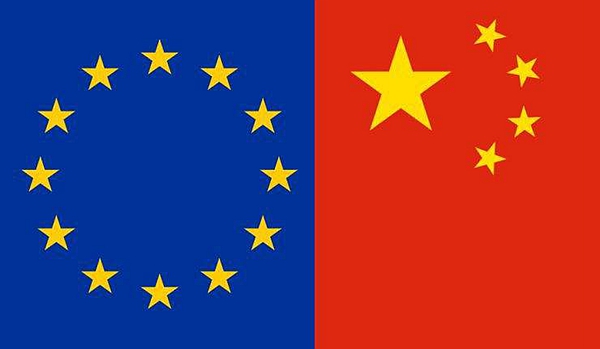
There is much common ground for China and the European Union to take a hand in solving many Middle East political issues. [File photo] |
I was in Brussels on a short academic visit with the Friedrich Ebert Stiftung office from June 21 through July 8, and was able to meet a number of EU officials thanks to my host's thoughtful arrangements.
These fruitful contacts convinced me that China and EU can cooperate on a wide variety of Middle East issues since there is much common ground in political thinking.
China and EU firstly share concerns about Middle East security. The U.S. and Russia are competing fiercely for geopolitical influence in the region, while China and EU regard the Middle East as closely related to substantial common security and economic interests.
The EU is deeply concerned about the terrorist threat and refugee crisis as the war-affected area in the Middle East is geographically connected with Europe. China also believes the terrorist threat to its northwestern territory of Xinjiang originated from the Middle East.
China and the EU also regard the Middle East as a shared economic partner. They both depend heavily on a stable flow of oil from the Arab world, and they both take the region as a major consumer of their products. These shared interests provide a solid foundation for cooperation.
They also hold similar positions on major Middle East issues. The EU wants to promote the peace process between Palestine and Israel, and even intends to pressure Israel into compliance on settlement issues. Unfortunately, Israel turns a deaf ear to the EU pleas.
The EU does take measures such as labeling agriculture products from those Israeli settlements considered unlawful, to remind potential buyers about "immoral consumption;" however, these measures have had little effect.
The EU's position and awkwardness in this regard are very similar with those of China. It believes the legitimate rights of Palestinian nationhood must be respected, and that the international community should work together to promote a solution fair to the interests of Israel and the Palestinians.
On the Syrian crisis, EU interlocutors unequivocally support the Syrian opposition. They believe that, without strong opposition, there will be no fair solution of the longstanding crisis. However, the EU shares China's perception that an early political solution will reduce the pain and the grievances of Syrian people.
The EU particularly believes the impact on Europe from the Syrian crisis will be greatly reduced as a result of an early political solution and a fresh start.
China and the EU also share the same attitude toward the Iran nuclear issue. They adhere to the commitments of the JCPOA while President Trump said during his campaign last year that he would tear up the deal, and is currently trying to sabotage it by provoking Iran with sanctions.
The EU used to strongly push Western-style democracy and humanitarian concepts, and continues to do so in regard to the preconditions for Turkey's admission to the club, and decides its policy on Iran based on an evaluation of its human rights records.
However, there are signs of change. Many EU officials and scholars seek an increase of pragmatism instead of principles, some saying the EU's Middle East policy has been hijacked by security concerns.
Chinese scholars welcome this as it comes closer to their own country's approach. Ever since the reform and opening-up in the late 1970s, China's Middle East policy has been characterized by pragmatism. Or, to put that another way, China does not attach ideology to its Middle East policy.
China and Europe can cooperate on Middle East issues because of the cooperation that has been achieved previously. Both China and the EU regard the Iran nuclear deal, in which they played a major role, as a success not only for Iran, but also for the international community.
European officials believe that the successful experience can be duplicated in cooperation in mediating other regional conflicts, to the benefit of not only the immediate region, but the world at large.
All in all, the foundations for cooperation between China and Europe have never been so good as they are today, since the two sides share very similar concerns, perceptions, positions and approaches dealing with Middle East issues.
European officials believe China can increase its security resources patrolling waters in the Red Sea to combat piracy since the worsening regional security situation will lead to more piracy threatening sea lanes.
China and the EU can also jointly protect the implementation of the Iran nuclear deal by diplomatic means. The two can also jointly mediate for a political solution of the Syrian crisis, and jointly promote the Palestine-Israel peace process as well.