Why Sino-French relations matter
On May 7, France will elect the 8th President of the French 5th Republic established by Charles de Gaulle in 1958. As has often been the case in previous presidential campaigns, debates among the candidates who aspire to lead the world’s 6th largest economy were largely dominated by domestic issues.
The successor of Fran?ois Hollande will nevertheless rapidly realize that in a globalized world, domestic and international issues are deeply inter-related. And in a century in which China has regained centrality, relations between Paris and Beijing not only deserve the greatest attention but call for a strategic approach.
China should be on the top of the next French President’s agenda for at least six main reasons. These are the necessity to consolidate Sino-European links to balance the trans-Pacific interactions, more effective global governance, sustainability, the creation of an Afro-Eurasian axis of prosperity along a New Silk Road, shared economic growth and the quest for equilibrium in a world of ubiquitous technology and human dignity.
Following the election of Donald Trump in the United States, China has become the most important external support of Europe. Paris and Beijing have to boost EU-China relations so their interactions to anchor a world whose center of gravity is rapidly shifting towards the Pacific.
In the post Brexit world, France and China, stand as the only two permanent members of the United Nations Security Council representing the European Union and Asia. Paris and Beijing, therefore, have a unique role to play on global security issues.
A wise political combination between what former French foreign minister Laurent Fabius called France’s power of influential, and China’s growing centrality can contribute to the progress of global governance. The July G20 Summit will be an opportunity for the two countries to demonstrate that their strategic partnership is really productive.
On environmental issues, France and China, architects of the COP21 success, have to make sure that the Paris agreement is implemented, despite the regressive attitude of the new American administration. On climate change, the international community expects Sino-French leadership and the two countries can deliver it.
China’s One Belt and Road Initiative takes into account the Eurasian realities but it involves also the African continent. With its traditional presence in Africa, France is ideally positioned to co-build an Afro-Eurasian axis of prosperity and peace. Such an ambitious and pro-active approach would also introduce a much needed new dynamic in the Sino-French economic relations.
In 2016, China became Germany’s largest trade partner. The economic relations between France and China are certainly significant but there is still considerable space to develop trade and investments between the two countries. Following an increase in 2015, commercial exchanges between the two dropped around 4 percent in 2016. France’s market share in China was 1.6 percent last year compared with 5.5 percent for Germany.
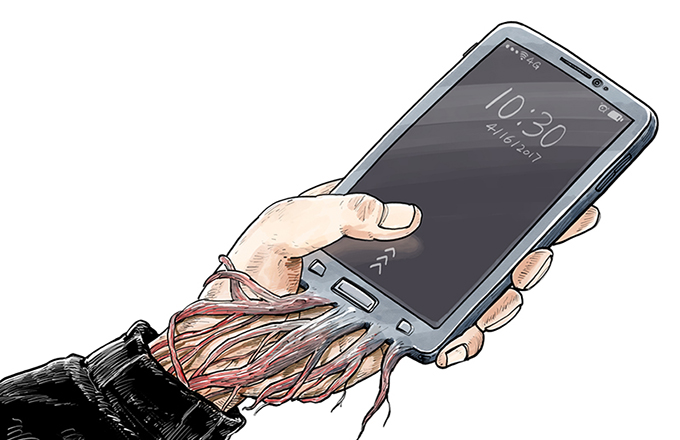
Last but not least, Sino-French relations should have a renewed focus on culture and place humanism as a cornerstone of their global approach. Cyberspace and computers do not have to be in conflict with humanities, culture and arts but ancient civilizations, China and Europe being two of them, have a responsibility to find the right balance between technological advancement and human dignity.
In this context, a structured Sino-French dialogue on the political, societal and cultural implications of Artificial Intelligence could be the nucleus of a larger conversation on what is a major disruption which should not only be discussed by the private companies that profit from it.
The long held mutual appreciation between the two countries - the vibrant Chinese community in France, but also the entrepreneurial French community in China - constitute the unique and solid foundation of Sino-French relations.
Rapid global transformation does not necessarily diminish their importance, but for them to remain mutually beneficial and globally significant, Paris and Beijing, must acknowledge their potential and have a strategic understanding of the objectives.
David Gosset, founder of the Europe-China Forum and of the New Silk Road Initiative, director of the Academia Sinica Europaea, CEIBS.