Diversion instead of prevention for future urbanization
 |
|
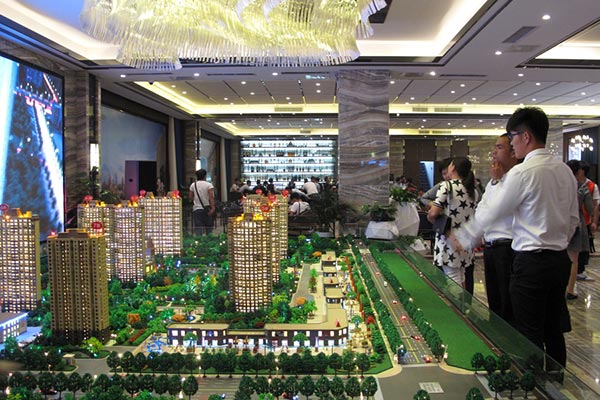
Models of residential buildings are seen at a sales center in Zhengzhou, Henan province, September 23, 2016.[Photo/VCG] |
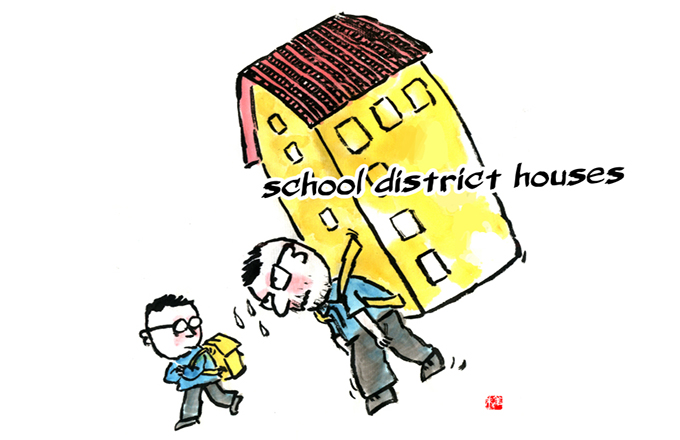
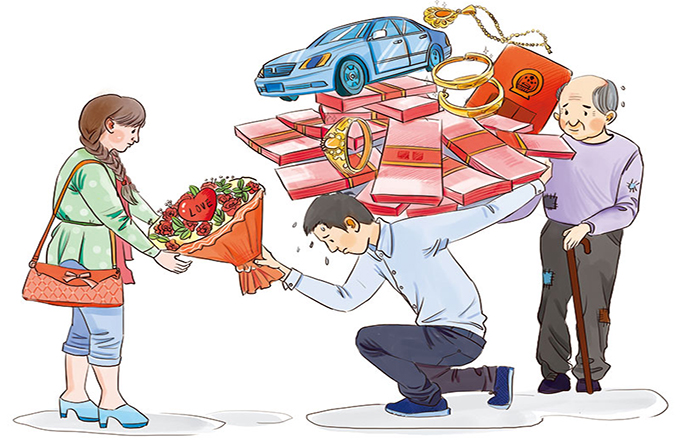
Housing prices have had continuous, long-term growth under the current urban development strategy. However, with the local government's rising land revenue and increase in operational costs, China Development Research Foundation's vice president Liu Shijing said the competitiveness of the industry has been dented. He added, at an interview with the Economic Reference Press on Jan 26, the market's current conditions were not cost-effective. The following is an excerpt of the interview.
Throughout China's urbanization process, property markets in both top and lower-tier cities face their challenges. Cities in the Jingjinji (Beijing, Tianjin, Hebei) economic circle are growing exponentially, alongside the Yangtze River Delta and the Pearl River Delta. The increase in growth stems from the area's ability to provide a higher amount of public resources to its people. Because of this, a large population puts pressure on the housing market, which leads to an increase in prices. On the other hand,lower-tier cities struggle with property market destocking.
The idea behind the previous urban development strategy was to set the threshold for the population scale in metropolises. This intervention has since proven to be useless, due to its antagonism against the inherent nature of society. People's desire to chase a better life in bigger cities couldn't be extinguished.
In order to build on, and strengthen, our nation, three factors should be considered for the current urbanization reform. Firstly, a multi-layered city structure should replace the super-cities siphoning the resources from surrounding areas. An agglomeration strategy, with a core city or cities, should be taken into practice.
Secondly, the current land supply system in metropolises needs to be reformed, and China's people need to see an increase of land available for residential housing. Rural collective land and homesteads – land previously allotted by the government to build houses–should be allowed to trade freely in the urban market, potentially helping increase nation's land supply.
Thirdly, property tax has proven a vital institutional design in many countries, curbing speculations of housing. China's authority should not wait too long to introduce it in order to iron out the sharp fluctuation of the property prices.
Overall, if the agglomeration strategy for developing big cities is effectively carried out,the flow of population could facilitate industry development, upgrades, a transformation of each area, and will eventually enable services and innovation-driven industries to play a bigger role.
This article is translated by Wu Zheyu.
- The future of sustainable urbanization in China
- Let the market determine urbanization
- Cities vie for opportunities in new urbanization blueprint
- Seeking Progress While Keeping Economic Performance Stable: A Methodology for Promoting New Forms of Urbanization
- Urbanization requires market-based planning
- People-oriented urbanization
- Successful urbanization not just homebuying