Xi-Trump meeting to clear many edgy doubts
 |
|
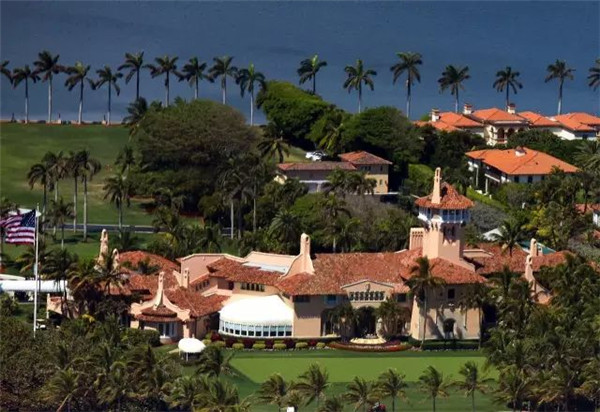
A bird's-eye view of the Mar-a-Lago resort in Palm Beach, Florida, where President Xi Jinping will meet his US counterpart Donald Trump on Thursday and Friday. [Photo/Xinhua] |
President Xi Jinping embarked on a trip on Tuesday that took him to Finland, from where he will fly to Florida on Thursday to meet with US President Donald Trump at the Mar-a-Lago resort. The first Xi-Trump meeting is not just about two top leaders comparing notes; it will also help to stabilize political relations between China and the United States.
The two countries have extensive shared interests as well as underlying disparities which, if not addressed, could lead to confrontations. To avoid the Thucydides trap, China and the US should make extra efforts to increase benign interactions between their militaries, as they play vital roles in the two countries' diplomatic designs.
It is also important that Washington drop some of its unnecessary concerns about Beijing's growing defense capability. Thanks to its robust rise in recent decades, China has become increasingly capable of pursuing defense-oriented military development. And it has good reason to do so.
China remains committed to peaceful development and a defensive military strategy, and it has always employed, and will continue to employ its military to safeguard national security interests and provide public goods to the international community. Deploying troops across the world to pursue global hegemony has never been an option for China.
Candid, open conversations are therefore called for to increase strategic trust between the two countries. In the past, military exchanges were the vulnerable aspect of China-US relations, because they were often the first to be cut off when bilateral relations soured. But with more regularized dialogue mechanisms and channels in place today, the two militaries have a more stable relationship. Still, more efforts should be made to avoid lethal military misjudgments that may cause unwanted hostility and invite complicated countermeasures.
One of the reasons Beijing has been developing its military is to deal with potential separatist moves by the "independence-minded" Democratic Progressive Party in Taiwan. Military development is a crucial part in the country's endeavor to safeguard its sovereignty and territorial integrity, and is not meant to counter the US' presence in the Asia-Pacific region.
Thanks to its unfounded feeling of being targeted and threatened, Washington has come up with a series of theories, including the anti-access area denial, air-sea battle concept and the conventional prompt global strike, to "counter-target" the Chinese military. It has also been conducting more so-called freedom of navigation missions in the South China Sea reconnaissance activities near China's exclusive economic zones, apart from enhancing its military deployment in the Asia-Pacific.
As more Chinese warplanes and warships participate in drills and other operations in the region, the risk of accidents may be rising, highlighting the need to improve the risk management mechanism between the Chinese and US militaries.
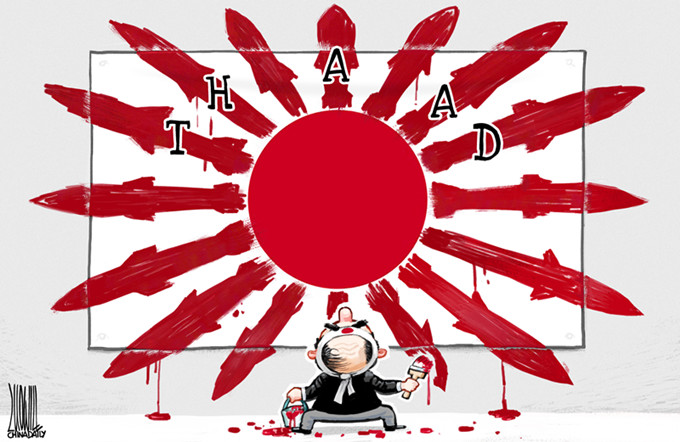
The "third-party" factors, or sensitive geopolitical issues such as the Korean Peninsula nuclear issue and the separatist forces in Taiwan, require the close attention of and deft handling by the two countries.
And although China and the US do not have any direct territorial dispute in the region, there is no guarantee that Washington will refrain from intervening militarily in disputes between its allies and Beijing. The Xi-Trump meeting therefore is an apt opportunity for the military authorities on both sides to clear misunderstandings and maintain close interaction.
The author is former director of the Institute for Strategic Studies at the People's Liberation Army National Defense University.