Phasing out subsidies puts green cars on right track
 |
|
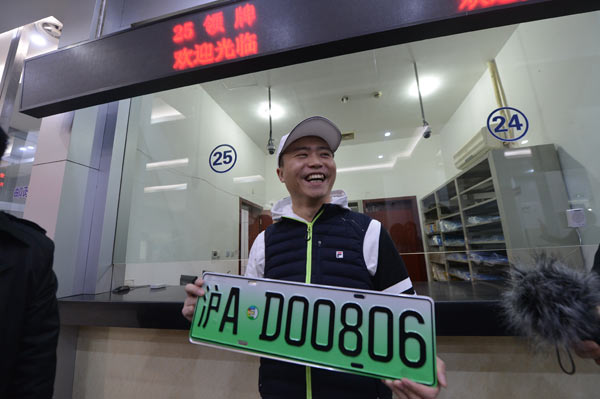
Wu Feng, owner of a Tesla Model X, is the first to install the new plate in Shanghai, on Dec 1, 2016. [Photo provided to chinadaily.com.cn] |
THE CENTRAL GOVERNMENT has said it will cut subsidies to new energy vehicles by 20 percent this year from 2016 levels, and urged local governments not to offer subsidies that exceed 50 percent of those provided by the central government. Changjiang Daily commented on Wednesday:
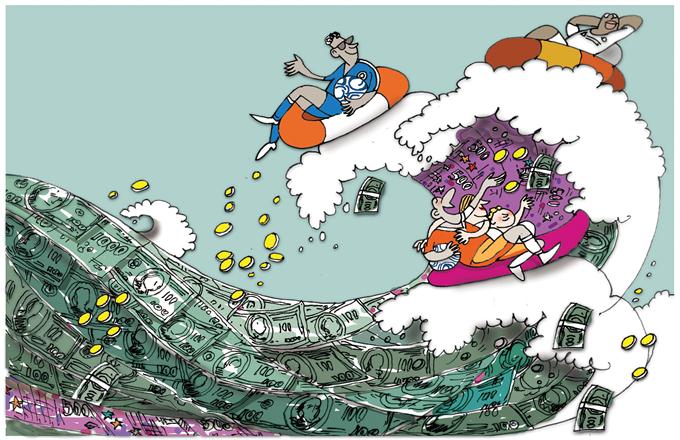
The authorities started subsidizing new energy automakers eight years ago to expand the production and sales of electric cars, plug-in hybrids, and fuel-cell cars. The total amount of subsidies that have been provided reached 33.4 billion yuan ($4.81 billion) by the end of 2015. As a result, the country has become the world's largest market for new energy vehicles.
For sustainable growth of the industry, government support was necessary in the initial stages, but the manufacturers of new energy vehicles must now focus on innovation and quality. Thus it is right for the government to raise the threshold for new energy automakers to receive subsidies, which are set to be phased out by the end of 2020.
Providing auto companies with generous subsidies at the expense of taxpayers will likely make them less motivated to provide quality products, and in some cases it has led to cheating. Seven new energy vehicle makers have been found to have falsely claimed subsidies for electric cars that were either unfinished or installed with sub-par battery cells. Without doubt, they will be barred from an official catalogue of recommended vehicle types that qualify for subsidies.
The fact is, the seemingly booming new energy vehicle market has failed to bring about any major technological breakthroughs. The quality and overall performance of Chinese new energy cars have not notably improved either.
A revamp of the industry's subsidy policy is therefore timely. But perhaps the authorities could draw some inspiration from the burgeoning car-hailing market, where competition is basically kept at satisfactory levels. Service apps subsidized both passengers and drivers in the very beginning, mainly to nurture the market in the early stages. They then cut the subsidies and let the market take over.
This approach could also work out in the new energy car market. Lessening restrictions on purchasing electric cars in big cities should be worth a try.