Why does Japanese embassy 'act as a spy'?
 |
|
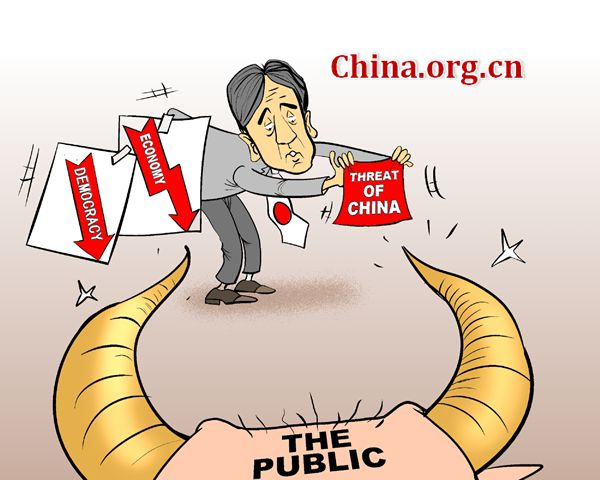
Distraction policy [By Jiao Haiyang / China.org.cn] |
On Jan. 29, the second day of China's Lunar New Year, The Times, a British national newspaper, published a report entitled "Rifkind a stooge in secret PR war on China," saying that the Henry Jackson Society (HJS), a U.K. think tank, is paid a total of 15,000 pounds per month by the Japanese embassy in the U.K. to voice opposition to Chinese foreign policy. Former British Foreign Secretary Malcolm Rifkind was approached by HJS and served as a stooge in this disgraceful deal.
According to the report, a provisional proposal wanted the think tank to deliver a "communications strategy" for the embassy at a cost of 15,000 pounds per month. Written in early 2016, the proposal aimed to engage U.K. journalists and high-level politicians, including members of the Commons foreign affairs select committee, to focus on "the threat to western strategic interests posed by Chinese expansionism." It added that "as part of delivering the 'threat' message, we will have to counter the growing belief, particularly in the U.K. Treasury, that Chinese inward investment can provide the answer to the U.K.'s infrastructure problems."
Chinese people who were celebrating the Spring Festival might have missed the report, but the problems it revealed are deep.
Why does the Japanese embassy fund the spreading of anti-Chinese propaganda?
Generally speaking, the responsibility of an embassy is to handle political, economic, military and cultural relations with the government of its host country and to defend the lawful rights of its citizens in a foreign land on behalf of its country. What the Japanese embassy has done goes against common sense and is no better than espionage.
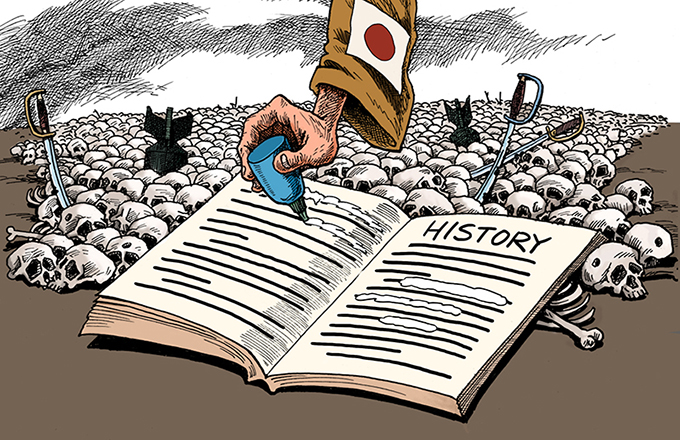
So, why did Japan conduct this kind of activity, which harms others without benefiting itself? As is known to all, the problems and conflicts between China and Japan are both historical and contemporary. Since the late 19th century, Japanese imperialists had wreaked havoc throughout Asia, and especially in China, for almost 50 years. However, it not only refuses to reflect on its wartime aggression, it also tries to revise history and set itself against China on territorial sovereignty as well as trade. Of course, the main reason for this fear is China's rise. In the wake of rapid economic growth during the past 40 years, especially since reform and opening up, China has leapfrogged Japan to become the world's second largest economy, and the gap is gradually widening. Along with its economic expansion, China is also growing into a military power.