How to supervise the anti-graft watchdogs
 |
|
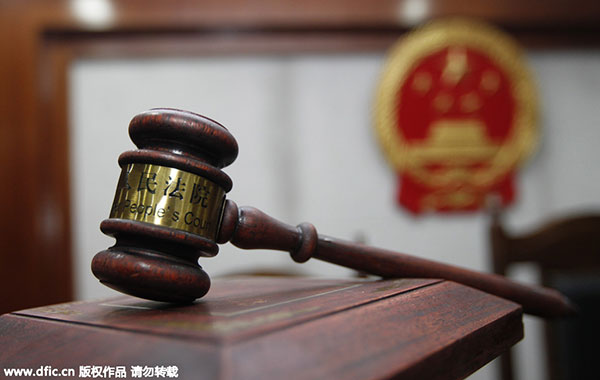
A gavel in a court. [Photo/IC] |
As an important part of the Communist Party of China's campaign for stricter self-governance, the Party's disciplinary officials, or anti-graft watchdogs, undertake the mission of "supervision, discipline enforcement and holding violators accountable", and thus play a decisive role in the Party's fight against corruption and drive toward clean governance.
But supervision of the anti-graft watchdogs has long been a difficult issue.
At the just-concluded annual plenary meeting of the top anti-graft watchdog-the Central Commission for Discipline Inspection of the Communist Party of China-Party chief Xi Jinping said disciplinary commissions at various levels should strengthen self-supervision and voluntarily put themselves under intra-Party supervision and social supervision, as part of the efforts to build a team of disciplinary officials that can win the confidence of the Party and the people. Xi's remarks should resolve the anti-graft watchdog supervision issue.
All disciplinary officials have to strengthen self-supervision, in order to build a first and critical line of defense against corruption and decadence. A team of trustworthy disciplinary officials cannot be built by relying on external supervision alone; stricter self-supervision and "supervision of supervisors" are also needed for that.
The building of such a team requires anti-graft watchdogs to continuously educate themselves about disciplinary rules, raise their awareness of the rule of law and learn to handle all cases in strict accordance to the law. Also required is stricter supervision of discipline enforcement by anti-graft watchdogs at the central, provincial and municipal levels.
Moreover, continuous efforts must be made to promote organizational and institutional innovations in the field of discipline inspection, and to deepen the discipline inspection system reform to ensure that the power of supervising discipline enforcement is used in a standardized and orderly manner.
Anti-graft watchdogs must put themselves under intra-Party supervision-which means supervision of various levels of leading Party organs and officials by various Party organizations and the massive number of Party members.
To help build a trustworthy team of anti-graft watchdogs, every disciplinary official must also take part in the Party's organizational meetings and collective activities organized by the Party branch or group he/she belongs to, and voluntarily put himself/herself under its supervision. The weapon of criticism and self-criticism must be well utilized to make all disciplinary officials realize their problems and strictly adhere to the rules. And the work of discipline inspection commissions must be regularly published in the form of bulletins, notifications and reports, and public opinion polls regularly conducted to assess their work in a timely manner.
Disciplinary officials should also put themselves under social supervision, that is, under the supervision of the people and social organizations, because aside from stricter self-supervision and intra-Party supervision, social supervision is also needed to build a team of trustworthy disciplinary officials. For example, hotline mailboxes can be set up for informants to expand the channels for whistle-blowers to reveal the names of disciplinary officials suspected of violating the law and Party discipline.
Besides, different types of activities can be organized with participants from different walks of life to solicit the opinions of people's political consultative conferences, democratic parties and social groups on disciplinary officials' work. The anti-graft watchdogs must also raise their capability of dealing with the media and publicize their discipline inspection work through media outlets to subject their work to journalists' scrutiny and better regulate discipline enforcement activities.
Hopefully, discipline watchdogs at different levels will better combine self-supervision, intra-Party supervision and social supervision and help build a team of disciplinary officials that can win the trust of the Party and the people.
The author is an assistant research fellow on political civilization studies at Beijing Union University.