Internet ushers in new age of charity
The development of internet-based charity activities has been amazing this year. Three landmark developments-legislation, the total amount of online donation, and rational public discussions-deserve the credit for the progress.
The annual session of the National People's Congress, the top legislature, in 2016 passed the Charity Law, which includes online charity law. And even though China lags a little behind some other countries in terms of modern charity legislation, it is taking the lead in online charity activities and making efforts to streamline the sector.
Internet makes it convenient for Chinese people to embrace modern charity. Online charity has grown pretty fast in China and has huge potential to expand further.
There are several reasons why online charity has grown at such a fast pace. The traditional practice was to donate money to charity organizations, thank yourself for doing a good deed and forget about it. That used to be the case partly because donors had little information about where the money they donated went and who benefited from it.
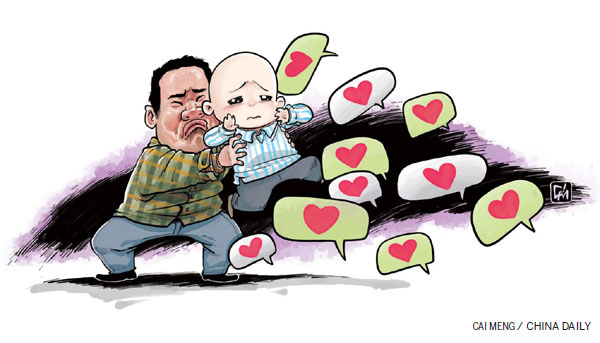
But today the internet offers information on online charity more transparently and frequently. Despite the positives, however, the development of online charity this year has not been without glitches. Late last month, it was revealed that Luo Er, who went online to seek public help to save his 5-year-old from leukemia, had hidden from people the fact that he owned three apartments-one in Shenzhen and two in Dongguan in South China's Guangdong province. Luo eventually returned the more than $360,000 money he had received to the donors but only after raising a controversy.
Some have called Luo "a liar" and blamed online charity for giving him the chance to fool the Good Samaritans. What such people forget is that the truth came to light only because of the internet.
While a few internet users hold radical opinions and blame Luo for everything, the majority have kept the discussion on a rational level. As a result, when Luo decided to return all the money he had received as donation, he could do so without much of a hitch.
The Luo incident also made netizens discuss what measures should be taken to make sure the information released on online charity platforms is complete and factual. The government, on its part, should take measures to better regulate such platforms and protect both the donors and those receiving the donations.
The internet will continue playing an influential role in promoting charity in the future, and the internet will propel China's online charity sector toward greater success.
Wang Zhenyao is the dean of China Philanthropy Research Institute at Beijing Normal University. The article is an excerpt from his interview with China Daily's Zhang Zhouxiang.