Tried-and-true consensus still the cross-Straits basis
 |
|
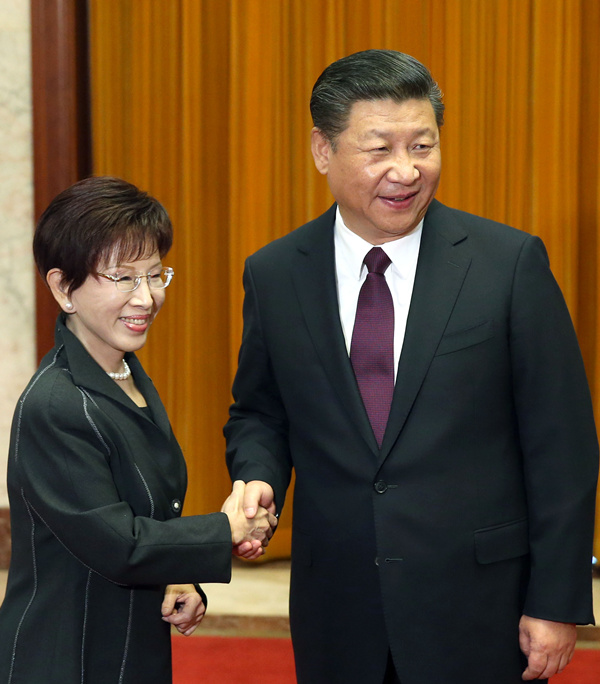
Xi Jinping, general secretary of the Communist Party of China Central Committee, meets with Taiwan's Kuomintang party leader Hung Hsiu-chu in Beijing on Tuesday. [WU ZHIYI / CHINA DAILY] |
Asked whether it has studied a mainland scholar's recent suggestion that Beijing may not oppose a "creative alternative" to the 1992 Consensus, Katherine Chang, the director of Taiwan's mainland affairs council, replied, "Yes of course", her institution is focusing on "breaking the present impasse".
Via authorized semi-official representatives, a historic cross-Straits consensus was reached in 1992 in which both sides agreed to the principle of one China.
While easing the historical enmity and injecting unprecedented warmth into cross-Straits interaction, the 1992 Consensus has been a thorn in the flesh for the pro-independence Democratic Progressive Party under Tsai Ing-wen. Cross-Taiwan Straits ties have been in deep freeze since Tsai became the island's leader in May because of her refusal to embrace the 1992 Consensus.
Despite the mainland scholar's message, the scholar himself and the mainland's Taiwan Affairs Office of the State Council have emphasized, whatever a new consensus could be, it cannot go around the 1992 agreement that both sides of the Straits are part of one China.
That being said, there is little room left for maneuvering agreement on an alternative consensus. It will entail extraordinary creativity on both sides, and the shared will, to accomplish such a task.
Rephrasing, paraphrasing the 1992 Consensus and giving it a new name, such as the "2017 consensus", might not be acceptable to Tsai and her party unless they simply want to get rid of a key hallmark of the previous Kuomintang leadership on the island. And there will be no deal if the principle of one China is left out because Beijing will not, and should not, allow it.
Did the scholar's suggestion win Beijing's tacit appreciation? If so, it was a show of goodwill as well as flexibility. It would signal that decision-makers in the mainland remain interested in maintaining the thaw in ties that had been engineered before Tsai began to freeze them again.
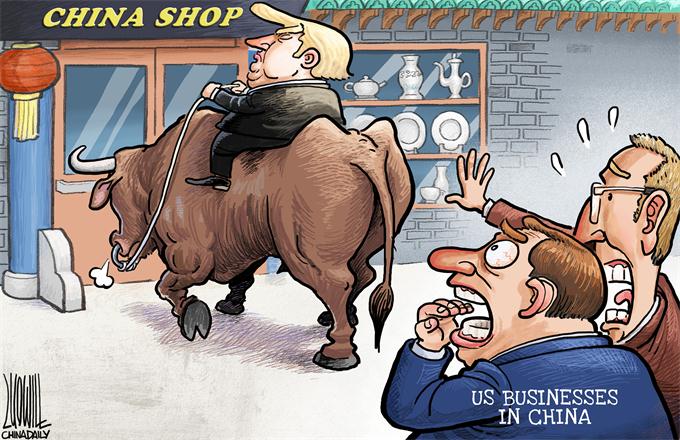
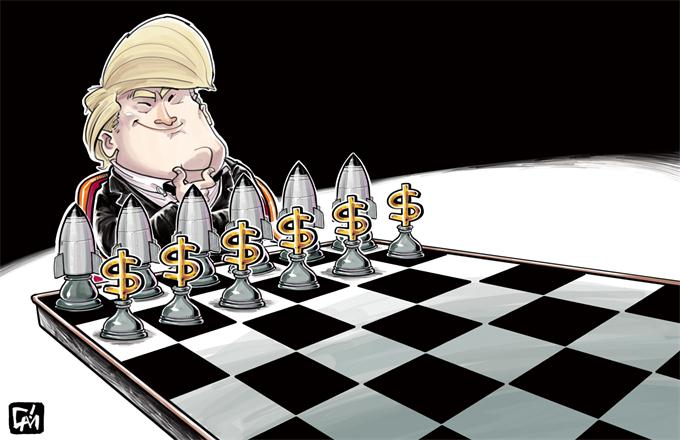
Such a signal might be of critical significance considering the damage that could be potentially unleashed if United States president-elect Donald Trump continues along a path he signposted with his provocative Dec 2 phone talk with Tsai.
It would be good if both sides of the Straits shared an interest in avoiding the worst-case scenario.
Yet redoing the tried-and-true consensus would take a lot of in-depth communication and interaction, in addition to unusual flexibility and imagination, the conditions for which remain regrettably absent.