China's bigger role championing free trade
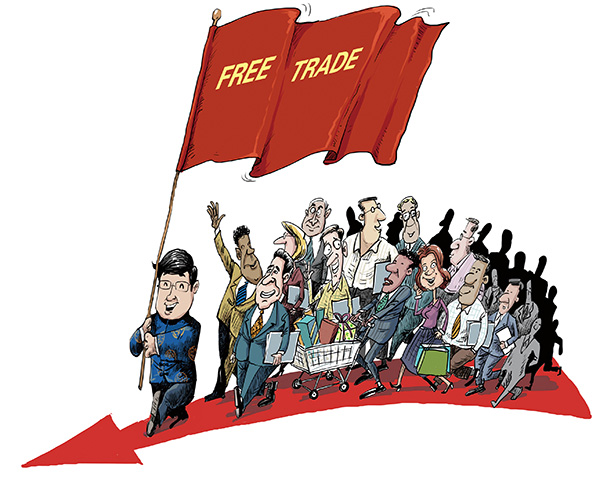 |
|
WANG QIFENG / FOR CHINA DAILY |
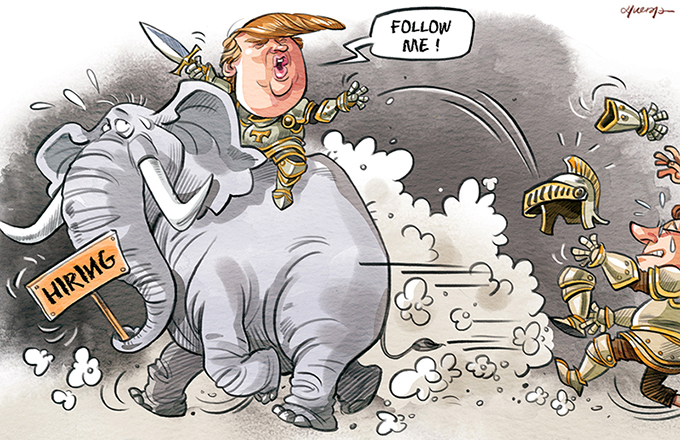
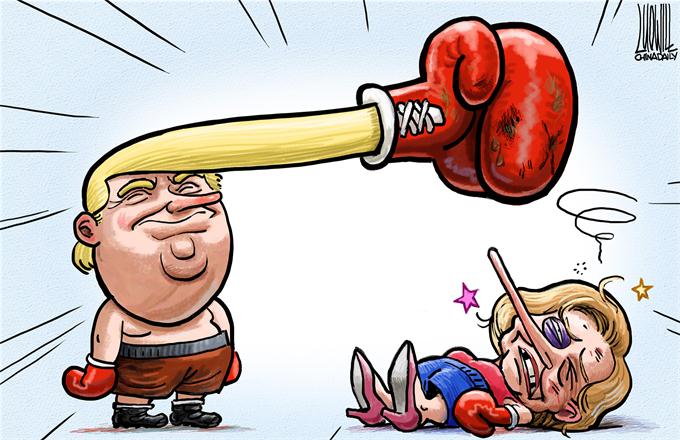
China and Latin America are important partners in trade and investment, and this relationship is bound to increase with time given that the two economies are complementary. China has bestowed the honor of core leader on President Xi Jinping, strengthening his leadership at a time when the Chinese economy has reached a new stage. The world economy is facing new challenges such as trade protectionism. Donald Trump, who promised to take protectionist measures during his election campaign, has been elected US president.
The new stage of the Chinese economy and the reforms to make it more competitive and healthier will create opportunities for Latin America. China's supply-side reforms aimed at reducing overcapacity of enterprises means that Chinese companies will be looking for investment opportunities abroad. For example, Chinese construction companies and railways will want to win projects abroad, and it is in these areas that Latin America lags behind. The region has a huge deficit in infrastructure such as roads, railways, seaports and airports. And these are the areas where China not only has companies with a lot of experience but also can invest.
Through the multilateral financial institutions in which China is the driving force, such as the Asian Infrastructure Investment Bank (to which Peru has applied for membership and will probably be admitted at the next meeting in January 2017), BRICS New Development Bank, and State institutions like the China Development Bank, Beijing could make available finance for several infrastructure cooperation projects that could boost Latin American countries' economic development. Such a project already exists-when Premier Li Keqiang visited Latin America last year, China and Brazil reached an infrastructure agreement worth $27 billion.
The already difficult international environment has now become more uncertain with the election of Trump who said during his campaign that the US would follow an "inward-looking policy"-which means protectionism. The open environment for trade and investment has benefited many countries, China in particular, so China should take the leadership role in areas where the US does not want to venture any more. For example, Asia-Pacific countries have developed fast thanks to open trade and investment. But since this trade arrangement is at risk, China, as the second largest economy in the world and the biggest trade partner of most of the countries in the region, should assume the leadership role in Asia-Pacific.
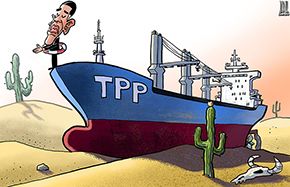
The Trans-Pacific Partnership Agreement, of which the US was the leading advocate, is now probably dead. The TPP was the model promoted by the US for the Asia-Pacific. Its competing trade agreement is the Regional Comprehensive Economic Partnership, in which China is the biggest economy, although negotiations are still going on. A new scenario for the Asia-Pacific and for China could emerge once the RCEP negotiations are completed, and it can become a model for the whole region. China can play an important role to make it a meaningful trade integration agreement. And it could promote talks on the Free Trade Area of the Asia-Pacific, another version of a free trade agreement in the region.
China should be the champion of open trade and investment. With Xi attending the Asia-Pacific Economic Cooperation Economic Leaders' Meeting in Lima, Peru, China can show the region, and the world, that protectionism is not the way to sustain the world economy.
China and Latin America can deepen their economic relations by inking more trade and investment agreements such as the ones that already exist between China and Chile, China and Costa Rica, and China and Peru. Deeper cooperation is needed to enhance free trade in an environment of rising global trade protectionism and anti-globalization sentiments. And China should take the lead in promoting this cooperation.
The author is a professor of economics at San Marcos National University in Lima, Peru.
- Free trade still the priority for APEC
- APEC meeting vital to progress on Asia-Pacific free-trade zone, says Mexican expert
- China to create third batch of Free Trade Zones
- Shanghai free trade zone promotes policies in Beijing
- Li promotes SCO bank, free trade
- Chinese official proposes free trade area for SCO members
- Nation completes free-trade agreement negotiations with Georgia: Spokesman