Parents can now play a healthier role
 The Ministry of Education recently issued a draft version of the Ten Rules for Reducing the Workload of Elementary School Students. According to the new rules, children from kindergarten to third grade will no longer be given grades in percentages, to avoid rankings in a class, and homework will not be given for children in some lower grades. These rules have the potential to reduce children's workloads and the cutthroat competition children unfairly face at an early age.
Some people have argued that the children's workload will simply shift elsewhere, for instance, from schools to homes, from teachers to tutors in the local community. They predict that parents who fear their children will lag behind other children if they have less work will send their children to remedial classes or arrange private tutoring sessions.
Therefore the issue boils down to parents' understanding of education. And there we have much work to do. I would give the following advice to parents to make this workload-reduction policy a real opportunity for positive change.
First, I would advise parents not to be myopic about tests. Instead of focusing on how much children learn and how ready they are for tests, reflect instead on what they learn and how they learn. Some parents may fear that the reduction of the children's workload will cause their children to be insufficiently prepared for the college entrance examination in the future.
However, higher education is becoming increasingly available as the pool of students shrinks, recruitment measures become more diversified, studying aboard is becoming commonplace, and higher education is undergoing transformation as technology and demographics change. Children now in elementary schools will enter a landscape of higher education that is different from that of today. It is important to prepare students more broadly for the challenges they will face.
Second, schools offer formal education that provides children with knowledge and job skills, but parents can and should be involved in preparing children to become future adults: husbands or wives, dads or moms, neighbors and citizens. At the moment, the focus for most parents in China is ensuring their children get good jobs, which of course is of paramount importance, but not at the sacrifice of other life skills.
Instructional design expert Dee Fink proposes a "significant learning" framework that includes such elements as foundational knowledge, application, integration, human dimensions, caring and learning how to learn. Chinese education is doing a fairly good job of teaching foundational knowledge, but is rather inadequate in other areas. These happen to be areas where parents can play a greater role.
Third, parents themselves ought to keep learning. Increased interaction with children means parents need to be better equipped to work with them. Nobody is born with all the knowledge to function as parents. Each age in our children's growth presents special challenges. Without learning from expert advice and listening to children themselves, we really cannot function well in our parental roles by simply acting on own limited knowledge and experience.
It is not always helpful to draw on past experiences, as some of them will now be irrelevant. We really need to learn how to effectively control and support children at each of their development stages. And it is an ongoing process, frustrating at times, but ultimately satisfying, as our own skills and knowledge grow.
Last but not least, take it easy. We as parents may shoulder more responsibilities as schools reduce children's workloads. But at the same time we have the opportunity to enjoy more time with our children. Use the time to take a walk with them, exercise together, watch a movie, or visit a park. Life is not all about grades. I say this with the understanding that most Chinese parents can never rest, not without a heavy sense of guilt, which drives both parents and children crazy. Fulfilling rest is a skill to be cultivated all by itself.
Parents have wanted the burden on their kids reduced for years. Now some concrete guidelines have finally been formulated, there is reason to rejoice. The time has come for the load to be lighter, and with that should come the opportunity for children to be children and parents to be parents.
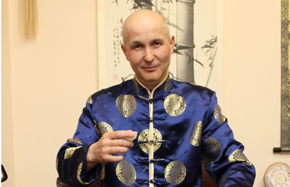
The author is a US-based instructional designer, literary translator and columnist writing on cross-cultural issues.
(China Daily 08/27/2013 page8)