The idea is to make education creative
As a university professor and graduate advisor, I have often had to counsel students on what it means to "study" in an institution of higher learning, especially in graduate school. The first question the typically "good" students ask after attending the first session of my seminars is invariably: How could I identify possible exam questions from what transpired in the classroom instruction process?
When assured that the emphasis of learning is on critical reading, creative thinking and discussions, they raise the next question: Can you deliver a lecture that outlines the complete contour of the field or subject?
Most students are not used to thinking on their own, or participating in and contributing to class discussions. They would rather enjoy being fed with "definite" knowledge by instructors. But they have to change their idea of what "knowledge" means, which assumes greater importance as they advance in their levels of education. Sometimes, I tell them the truth: none of the "theories" we learn should be regarded as "definite truth".
They are surprised that I, known in the faculty for delivering lectures in two languages, often abstain from speaking too much in class but am eager to facilitate students' discussions and inspire them when they run out of creative ideas. I have to explain to them that a mediocre teacher tells, a good teacher explains, a superior teacher demonstrates, while the best teacher inspires. We do not profess to be the best teachers. But to be a competent teacher, one does require a lot of inspiration and inspiring, instead of the ability to flaunt one's knowledge or show off one's eloquence.
Education experts believe that 30 percent of education is inspiration, and the rest is waiting. Gradually, as the semester and the course move on, students who adapt well start to have fun in critical reading, preparing for presentations, participating in discussions, and enjoying the fruits of creative thinking.
Some of my best students have told me that after taking their initial college courses in other institutions, they ended up with a mind full of other people's ideas and theories picked up from textbooks and lectures. In contrast, my classes leave them with a stimulated mind full of "theories" of their own, which could be put to test during their future course of study.
But not all effects of creative education can be manifest and measured in the short run. That is exactly why our style of academic communication has become more of a craft and less of an art. Administration in education at all levels demands that we quantify everything and create all kinds of "indexes" to measure the effect of teaching and learning.
At contests on teaching techniques, which are now held often, professors become performers whose role is to entertain the "audience". Yet research results indicate that the more engrossed students are in a teacher's "performance", the less they would think critically on their own. Like the audience of an entertainment show, students will just take in the information being fed to them by the "performing" teachers. I'm not saying that academic communication cannot be a craft. What I am saying is that it has the potential of becoming an art.
Teachers can enter a class carrying written materials enough to last three hours. But good teachers refrain from doing so and, instead, get students to voice their opinions and then intervene if the need arises. This style of communication in creative education has had a great impact on students who graduated in the past decade. Even today these students say they have retained much "quality" and "ability" long after forgetting the specific knowledge acquired in college.
But the method should still be applied with increasing caution, because today's college students are mostly people born in the 1990s, while when I first started experimenting with the method most of the students belonged to the 1970s' generation. The "new" students can express themselves better but are less willing to concentrate for long hours on careful reading and critical thinking.
Therefore, new methods are needed to respond to new situations. The only thing that remains the same every year is the creative spirit and interactive style. The rest has to be altered slightly or drastically according to the characteristics of the students in class. More control is exerted before and in class to ensure that the students keep to the point and the learning process is fruitful.
For the success of creative education, it is necessary to promote the "ideal elements" required of students (not just teachers) - interest, industry, intelligence and insight, which are indispensable to delightful and innovative learning and made possible by the constantly inspiring interactive communication facilitated by teachers.
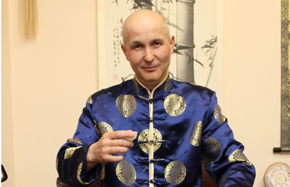
The author is a professor with the School of Journalism & Communication at Xiamen University in Fujian province.
(China Daily 08/24/2013 page5)