How to develop wushu into a global art form
Scandals involving wushu, or traditional Chinese martial arts, have hit the headlines recently. Some so-called wushu masters have even claimed that they have the ability to keep people in good health. They include "tai chi master" Yan Fang, "traditional Chinese medicine master" Zhang Wuben and "qigong master" Wang Lin, who were later exposed as frauds. The scandals and false claims of these "masters" have made many Chinese wary of wushu and its practice.
There is little doubt that practicing wushu helps a person keep physically fit. As an old saying goes, written characters are highly valued in peacetime while wushu skills are important during turbulent days. Even in these days of deadly weapons, martial arts are essential for military personnel, because they not only help them maintain physical fitness, but also teach them survival techniques on the battlefront.
Wushu developed with the changes in dynasties in ancient and medieval China. The late Qing Dynasty (1644-1911), in particular, saw the emergence of many wushu masters - such as Dong Haichuan, founder of Eight Diagrams Palm, and Yang Luchan, a leading tai chi master - who glorified the spirit of "building up the nation and its people".
With the development of modern weapons, being highly skilled in wushu is no longer a sought after quality. As a result, less and less attack and defense tactics are used in wushu nowadays. After China introduced reform and opening-up, and the economy began developing at a rapid pace, people realized there was no longer any strong need to practice martial arts for self-defense.
Therefore, more people today practice wushu just as a form of exercise to keep fit. Since a person can become a skilled practitioner of wushu only through extremely rigorous practice, so we rarely come across a real martial arts master in today's society.
Martial artists who grew up in peacetime may have seen the real wushu skills from senior masters. Today's martial artists did not practice hard enough and never took part in a real battle, so they cannot be considered real wushu masters. Not surprisingly, many of them look down upon the art of attack and defense in wushu, and focus on performance styles for the stage, which is not what real wushu is about.
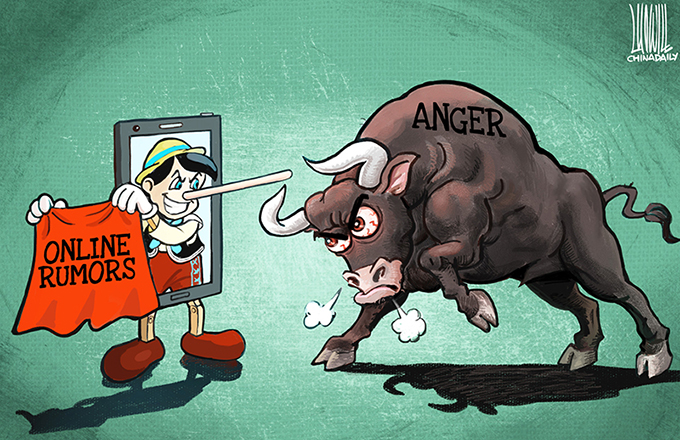
Moreover, some so-called masters have even used fraudulent tactics to fool the people by describing wushu as a mystic art like in fictional kung fu novels. No wonder, the noble art of wushu is embroiled in controversy today.
Given the current situation, the Chinese Wushu Association has introduced the wushu duanwei system, a hierarchical system that evaluates practitioners' qualifications, combat skills, theoretical knowledge and morality in a standard way. It is a system derived from the successful experiences of karate and kickboxing in Japan and the Republic of Korea. For over a decade, this system has provided traditional Chinese martial arts strong support and helped it spread out outside China.
But the current standard training method should not break the original rules. Since wushu has its own characteristics in terms of individualism - in the past, masters usually taught their students according to their aptitudes - it can foster different martial and artistic groups under the same master making it easier for one school's techniques to spread wider and faster in society.
That's why it is still important to focus on the advantage of individual art and technique when it comes to wushu. Besides popularizing and promoting traditional Chinese martial arts, we should also try to discover more special talents to receive special training. Only if we have more special talents can wushu be developed into a global martial art form.
The author is the general secretary of Beijing Eight Diagrams Palm Association.
(China Daily 08/13/2013 page9)