Picture of housing health
The photos of so-called ghost cities do not show a true image of the real estate market outside the first-tier cities
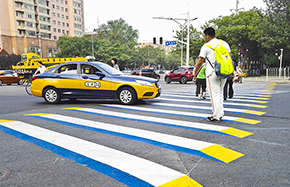
Ordos in Inner Mongolia autonomous region and Changzhou in Jiangsu province have become synonymous with China's supposed housing market excesses. Pictures of parts of these towns show desolate apartment blocks and deserted streets, with accompanying stories of real estate market collapses. However, these pictures do not tell the whole story. Our research shows that Ordos and Changzhou are exceptions rather than rule for China's 200 or so small lower-tier cities.
Understanding what is going on in the smaller cities is becoming increasingly critical in assessing the impact of the real estate sector on China's overall economic growth this year. We examined the limited public data available for the real estate market and found that the situation in smaller cities is not nearly as bad as the situation in Ordos would suggest.
Our first indicator is the inventory level of available houses in the 30 largest cities. This is calculated by deducting apartment sales from land sales in prior years. This arguably simple model has worked well in predicting future apartment prices in first, second and third-tier cities since we developed it a couple of years ago.
For instance, in 2012, the model clearly signaled that apartment prices in first tier-cities were likely to rise in 2013, given very limited projected supply. As we stand today, the inventories in first-tier cities have to fall further in the second half of the year. Bolstering the reliability of the model, cities with higher past inventory levels - according to our estimates - such as Tianjin, Wuhan, Qingdao, experienced limited price gains or even price declines in the subsequent quarters while those with lower inventories such as Shenzhen, Fuzhou and Nanchang saw higher prices.
In the same vein, the model suggested that supply in second-tier cities was sufficient to prevent prices from rising as aggressively, and that price inflation in some second-tier cities, such as Nanjing and Xiamen, does not appear to be a problem. Inventories in second-tier cities, usually the municipalities in well-developed provinces, remain elevated, equivalent to about 15 to 17 months of sales. This suggests that price pressures in these cities will be limited for another year or so.