Migration can't solve education problems
Though such methods are often justifiable in certain contexts, life presents too many opportunities in which success is not measured by how well we compare in a group, but how well we fare against a certain criterion or set of criteria others may not share with us. There are situations in which people collaborate and meet the same criteria. And there are situations in which the need to collaborate outweighs the need to compete with each other. There is a severe disconnect between such realities and the exams that focus only on norm-referenced statistical distribution. Educational paradigms need to change and they will change.
Parental love for children is noble, but parents should be warned that changing the "macro environment" may not solve the problems troubling them at the moment. It may be just a way to replace all hammers with all screwdrivers. Every country, including developed countries like the United States, has its own set of problems in education. And the funny thing is that in the US, I also hear educators using the good examples of Chinese schools to make a point. I have sat through long speeches focusing on why Americans are failing in education compared to their Chinese counterparts.
To relieve our anxiety about education, we need to see beyond the change of merely the external environment. It is better to reflect on what learning actually is, and how to develop a child into a healthy, happy and contributing person.
Chinese education, as I see it, is excessively focused on the study of domain knowledge. Little attention is paid to the more sustainable qualities a person ought to have, for instance, the ability to imagine and innovate, to communicate and collaborate, to resolve conflicts and to relate to others.
Also, parents should try to think of themselves as part of the "macro-environment" they are trying to flee from. They should learn how to diagnose their children's needs and interests, and how to help them fulfill their potentials. Without doing this, parents risk changing the environment only to get more of the same results.
I see most overseas Chinese parents create cocoons around themselves. They gather together and apply the same pushing and forcing methods to make their children learn whatever a fellow Chinese parent is boasting about, in absolute disregard of their real needs and totally oblivious of the rich resources the new environment has to offer. Why bother to move out of China then? I wonder.
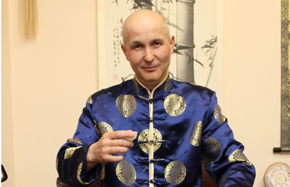
The author is a US-based instructional designer, literary translator and columnist writing on cross-cultural issues.
(China Daily 07/15/2013 page8)