What 'Likonomics' has to offer

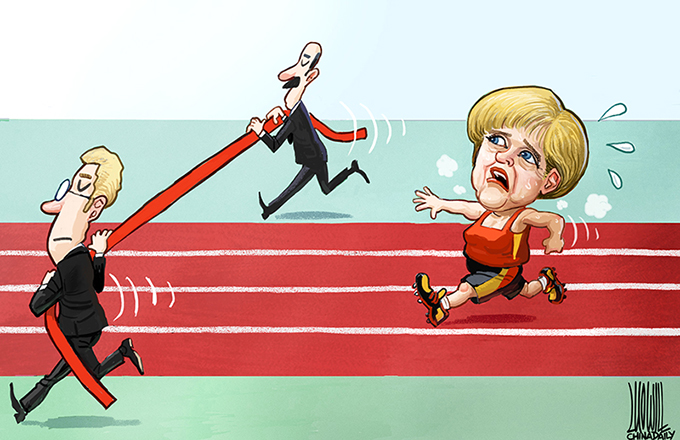
Since assuming office in mid-March, Premier Li Keqiang has taken a different policy path. Its key economic policy framework, which could be summarized as "Likonomics", consists of three key pillars: no stimulus, deleveraging and structural reform.
In the three months since taking office, the government has resisted repeated calls for new stimulus because it believes State-led investment is no longer sustainable. Instead, the authorities are making efforts to control financial risks, especially the flow of credit that could be fuelling asset bubbles.
If Japanese Prime Minister Shinzo Abe's "Abenomics" is about reversing deflation and restarting growth, Likonomics is about deceleration, deleveraging and improving the quality of growth.
June 24 marked the 100th day of Li in office, but the markets were in no mood for celebration. The Shanghai A-share index dropped below 2,000 that day. Four days earlier, the Shanghai inter-bank overnight rate had shot past 10 percent, compared with its normal level of close to 2 percent. A little earlier, the HSBC PMI for May was reported to be 48.3, a nine-month low. Market sentiment is understandably downbeat, again.
However, some of these developments are intended policy results of the new government. Its three key pillars may imply further downside risks for the economy and the markets in the coming year. But China has to take such policy measures now in order to avoid much more disruptive outcomes in the future.
Li's prize-winning dissertation for his doctoral degree in economics from Peking University in 1994 analyzed China's three-sector economy in the 1980s and 1990s - agriculture; township and village enterprises; and the urban sector. In Li's analysis, structural change is a constant source of productivity growth and economic development.
Over the past few years, economists and policymakers have reached a consensus that China should accept slower growth and focus on structural reforms. And this is the foundation of the three pillars of Li's economic policy.
No stimulus: On May 13, in a speech broadcast to officials around the country, Li said: "To achieve this year's targets, the room to rely on stimulus policies or direct government investment is not big - we must rely on market mechanisms." This is because relying on government-led investment for growth "is not only difficult to sustain, but (it) also creates new problems and risks".
In fact, many heavy industries, such as steel, cement and aluminum, are struggling because of serious overcapacity problems. Recently, the government delayed the planned urbanization conference in order to revise the official document to downplay the importance of fixed asset investment in China's new urbanization drive.