Disguise can't hide intent
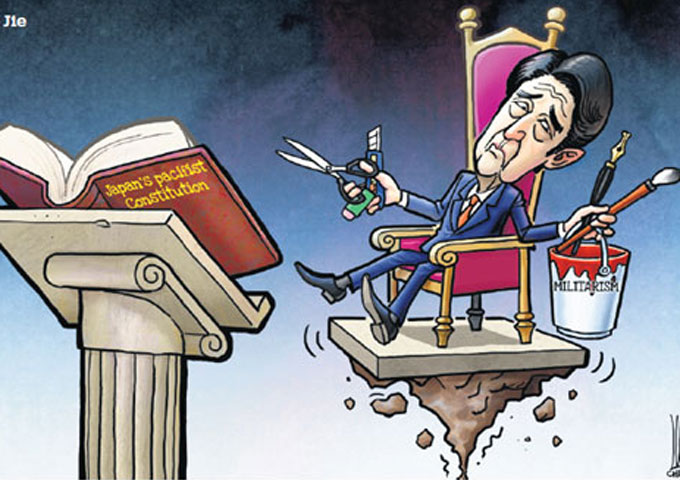
Japanese Prime Minister Shinzo Abe has been pursuing his country's diplomacy in a more active and aggressive way since returning to power, showing special preference for the so-called common values of freedom, democracy and human rights. It seems that without such common points, other countries won't even consider developing normal state-to-state relations with Japan.
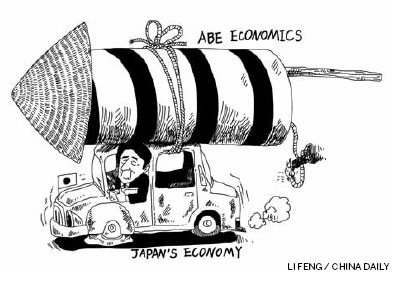
This is no different to the "value diplomacy" pursued by Abe during his first tenure in office more than six years ago. Scrutinizing the essence of this so-called value-based diplomacy can provide much food for thought, as the Abe cabinet is displaying a "schizoid personality" on these values.
After the Meiji Restoration, Japan walked up an invasive road abroad, its aggression and the rapid expansion of its war machinery bringing untold suffering to its Asian neighbors, including China, as well as the Japanese people.
Guided by its expansionist policy that to conquer the world it needed to conquer China first and, to conquer China it needed to conquer Mongolia and the three Northeast provinces first, Japanese militarists premeditatedly stirred up a war of aggression against China, which further spread to Southeast Asian countries and reached islands in the Pacific. The Japanese military committed the most brutal, atrocious crimes in history, committing extremely cruel massacres, using heinous bacteriological weapons and poison gas, forcing women into sex slavery and men to be slave labor.
After World War II, most chief Japanese militarists were brought to justice at the International Military Tribunal for the Far East, and the country drew up a pacifist constitution and returned to the international community again. Logically speaking, Japan should have thoroughly reformed itself, not only its political institutions, but also its values, and it should have bid farewell to its pre-war history of trampling over freedom, democracy and human rights.
Unfortunately, Japanese militarism did not die out, some militarism lingered on, and some militarists even re-entered the Japanese political power center. Under the manipulation of these forces, Japan rewrote history in its schools, trying to conceal and distort the truth about the history of its aggression, resulting in most of the Japanese people having only a vague or even wrong understanding of history, and a number of ultra-rightist politicians adopting a stubborn stance on the country's pre-war values because they lack a historical memory.
Ironically, the nation that failed to face up to history has disguised itself as Asia's "model of democracy" for a long time and peddled its so-called democratic experience in an attempt to gain international support and trust by falsifying its image.