Road ahead for China's food safety
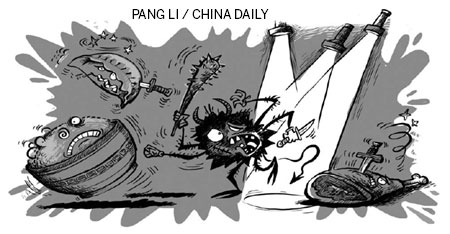
China has been rocked by a number of food safety scandals and agriculture product-related health hazards in recent years - from contaminated milk powder to the selling of rat meat as lamb. But the most recent food safety scandal hits at the core of China's food system: rice. Reports that some of China's rice is tainted with cadmium - a carcinogenic heavy metal that could induce multiple organ damage - have further deteriorated consumer confidence in the integrity of China's food system.
Today, China finds itself at the crossroads of economic development and food safety. The country's impressive growth momentum has had a significant impact on food safety through a number of channels, including rapid industrialization, agricultural intensification and urbanization. The question is: How can China continue along its current development path without sacrificing its food safety?
The robust growth of China's manufacturing sector during the past several decades means that the number of factories, mines and other industrial facilities is increasing, and industrial clusters are increasingly encroaching on agricultural land. This shift increases the risks of land and water resources being contaminated by industrial activities, threatening food safety well into the future.
At the same time, China's growing and increasingly more affluent population is demanding more food, resulting in the intensification of food production. In an effort to keep up with the rising demand and to increase profits, some farmers, food processors and traders are cutting corners on food safety and are increasingly using potentially hazardous inputs and production methods, such as unsafe levels and sources of fertilizer.
Going beyond a traditional definition of food safety, more intense food production has also been linked to a new wave of zoonotic diseases, such as avian influenza, which are infectious both to animals and humans. In particular, the increasing size and density of modern livestock operations offers a fertile environment for the transmission (and evolution) of diseases between animals and from animals to humans. According to the Institute of Development Studies, more than two-thirds of all human infectious diseases originate in animals, and the rate of animal-to-human transmission has increased over the last 40 years.
China's population is also becoming more urban, which presents its own food safety challenges. In the past, the majority of food was produced and consumed locally. Nowadays, large quantities of food are transported over long distances to reach urban centers, increasing the risk of food contamination.