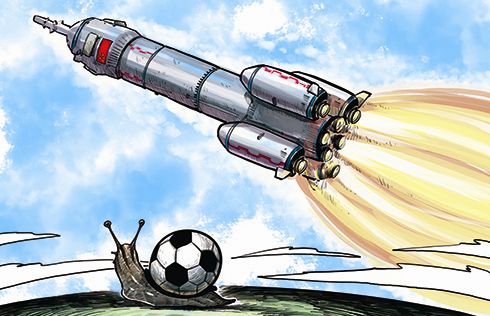
Energy-saving upgrading
China's target of cutting the amount of energy used per unit of GDP by 16 percent from 2011 to 2015 will hopefully be met if the country adopts a balanced economic strategy that highlights both growth and sustainability.
A major energy consumer, China has made relentless efforts to cut energy use while contributing greatly to global economic growth. Its energy use per unit of GDP fell by 19.1 percent in the 2006 to 2010 period, when its economic scale expanded by almost 90 percent.
The momentum of reducing energy use may be carried over into the coming years thanks to the country's continual implementation of energy-saving policies and its slowing pace of economic expansion.
It has been restructuring its economy, tilting it towards high-tech and tertiary industries that use less energy. In its latest move to reduce energy consumption, the central government last week picked nine sectors, such as the manufacturing of automobiles, cement and iron and steel, for industrial consolidation, so that they can become more efficient in energy use while their competitive edge is sharpened.
Meanwhile, the country has been upgrading its energy-saving standards and making use of fiscal and taxation measures to encourage the use of energy-saving technologies and products.
Such steps are urgent given the severe energy situation China faces.
International energy prices have soared in recent years, and with China's limited energy resources unable to satisfy domestic demand, its dependence on external supplies has been continually rising. Geopolitical instability in the oil-producing regions and global financial volatility have further exacerbated the situation.
To save energy, repeated regulatory measures are necessary, but obviously not enough. China has initiated several campaigns to eliminate "backward production capacity" over the last 10 years, but the total amount of energy consumed has continued to increase.
The real fix lies in China's willingness to cast away its GDP-centered development philosophy - even when its economic growth is slowing - and accelerate restructuring of its economic pattern, so that industries that consume less energy can become the backbone of the economy.
It should also increase the proportion of new clean energies, such as solar energy and natural gas, in its energy mix to reduce dependence on oil.
China is already moving in that direction, as shown in its recently released national energy plan for 2011 to 2015, but it will prove a painful and time-consuming task as the country enters a slow growth track.
(China Daily 01/28/2013 page8)