Making tea to make a world of difference
Updated: 2011-04-08 08:03
By Berlin Fang (China Daily)
|
|||||||||||


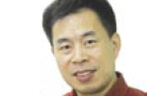
A friend, Yin Taiwu, visited me in the United States recently. He brought me tea from China, and interesting talks about making tea. Seeing him going through the steps of tea-making was a change from buying coffee from Starbucks or a 79-cent Big Gulp from 7-Eleven.
Tea-drinking is rather symbolic of the leisurely and slow life that intellectuals in the East used to enjoy and promote in a different era.
Things today are changing in a way that can shift people of a particular culture from one extreme to another. When Lin Yutang wrote the Art of Living in the early half of the last century, it was obvious that Chinese were still practising such a way of life. Lin criticizes Americans for their faster way of living, which prevents people from getting the best out of life. Today, Lin could be speaking about Chinese using the same words.
|
||||


Over cups of tea, Yin told me that every new employee in his company learns to make tea as his/her job orientation, though his company sells home surveillance products instead of tea. Whenever customers and vendors pay a visit, his employees prepare tea for them through a ritualistic tea ceremony, described as "teaism" by Okakura Kakuzo, author of the Book of Tea.
Yin also uses this kind of learning to train his employees to become better business associates and colleagues, though he confesses that he is not the first to start this kind of training. During the Qing Dynasty (1644-1911), Emperor Kangxi (1662-1723) trained his grandson, Prince Hongli (later Emperor Qianlong - 1711-1799) the same way. Instead of discussing something like Sun Tzu's Art of War, Kangxi used the art of tea-making as part of his successor's training.
To make the best tea, you have to have the right teapot, right kind of water, right temperature and right timing, all working together to produce the best flavor. A story from Feng Menglong's Stories to Awaken the World may be most illustrative of the intricate ways elements act upon each other in the tea-making process.
Wang Anshi (1021-1086), a Song Dynasty (960-1279) politician and scholar, asked scholar, poet Su Shi (1037-1101) to fetch water for him from the middle of the Three Gorges section of the Yangtze River for his Yangxian tea leaves. Su overslept during his trip, and instead of fetching water from that section of the river, he got it from the lower gorge, thinking that it probably wouldn't make much difference. Yet upon tasting the tea made with the water, Wang could immediately tell which section of the Gorges the water was from. This might be a legend, but it is so true when it comes to tea-making.
Tea makes a man exact, and agile. You have to get things orchestrated and optimized to produce a certain result. For the lack of ways to quantify attributes of various elements in tea-making, a tea master develops astute judgment about the tool and the skill for using such tools. Such learning can be easily transferred to other fields.