Op-Ed Contributors
Debate: Sino-US S&ED
(China Daily)
Updated: 2010-05-24 07:56
 |
Large Medium Small |
Harping on the yuan will help nobody
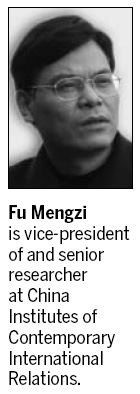
Fu Mengzi
In the initial days of Barack Obama's presidency, China-US relations progressed smoothly. But a series of unfriendly actions by the US since the beginning of this year have soured bilateral ties. Now the Strategic and Economic Dialogue (S&ED), which begins in Beijing on Monday, gives the two countries a chance to reduce friction and expand their areas of agreement.
It would be better to keep in mind that the meeting is being held under some unprecedented circumstances. Major economies seem to have rebounded after weathering the unprecedented global financial crisis. Thanks to the relatively fast growth China is likely to replace Japan as the world's second largest economy. And the US economy has seen a better-than-expected recovery with a remarkable 3.2 percent year-on-year growth in the first quarter of this year.
But despite the recovery, America's financial situation is far from optimistic and unemployment in the country is still high. In fact, the jobless rate in the US rose to 10 percent in April. This, with domestic political pressure, has forced the Obama administration to resort to trade protectionism. Making matters more complicated is the Greek debt crisis that threatens to rock the European Union (EU) as well as the international financial markets.
Third, the G20 summit, scheduled for June, is expected to put global rebalancing in the post-global economic crisis era high on its agenda. The important topics to be discussed would be how to end trade protectionism, strengthen financial supervision, deal with global challenges and promote cooperation among developed and developing countries.
Though the S&ED is of strategic, comprehensive and long-term significance for China and the US, the American delegation would hope it centers on the revaluation of the yuan. US Treasury Secretary Tim Geithner is different from his predecessor, who under George W. Bush used prudent words to describe China's foreign exchange rate regime. As soon as he assumed office, Geithner called China a currency manipulator, sparking fierce arguments between the two countries. Though Geithner softened his position later, he has rarely spoken about China without mentioning the yuan exchange rate.
By holding hearings, the US Congress, too, is prompting the White House to pressure China to revaluate the yuan. Washington has deferred the publication of a Treasury report, originally scheduled for April. The postponement of the report, which in all probability calls China a currency manipulator, is meant to create soft pressure on Beijing and make it agree at the meeting to revaluate the yuan.
For years, the US has attributed its trade deficit to the allegedly undervalued yuan. And the current global imbalance, which in no way can be blamed on a single country's exchange rate regime, gives the US a chance to incite worldwide attacks on China.
The US-led international pressure on China to revaluate its currency will undoubtedly put the yuan under the spotlight at the Beijing meeting. The fact is that the yuan's exchange rate against US dollar has hit a new high in almost eight months, and the euro's exchange rate against it has dropped by 10 percent. This means the yuan has risen against the dollar and euro both. But still, the US wants more.
Some experts have warned that a big one-time jump in the yuan's value will throw a lot of people out of jobs in China's export-oriented manufacturing industries and slow down its economic development, which in turn will harm the global economic recovery. And that will not create jobs in the US.
The US should learn from the Japanese example. Even 10 years after the value of the Japanese currency was raised dramatically against the US dollar, no remarkable decline in Tokyo's trade surplus with Washington was seen. Japan's trade surplus with the US has not changed; it has just been dwarfed by China's even larger trade surplus.
The root of the international economic imbalance is the dislocation of the US domestic macro-economic policy, the imbalance between spending and savings, overly loose monetary policy and rampant financial speculation without proper supervision.
The currency of a rising economy like China can be expected to rise. But when and how it should increase in value is the sovereign right of that country. The pressure on export competitiveness and severe domestic employment situation made China decide that the yuan would not follow the Japanese yen's example of dramatic revaluation. Hence, the gradualist approach it has followed since 2005, that is, a flexible and managed floating exchange rate regime, would be a proper policy option for China.
In the long run, China could adjust the yuan's peg to the US dollar. With diversification of international currencies, the yuan's peg to the US dollar could be replaced by pegging it to a basket of currencies. This way, the marketization and internationalization of the yuan will move forward progressively.
The S&ED has a broad agenda, including economic issues and security matters, and it is unreasonable to force it to revolve around the revaluation of the yuan on the pretext that it would help reduce trade imbalance between the two countries. The Beijing meeting is of great importance to the two countries, because bilateral trade is expected to proceed with increasing interdependence, but it would be unrealistic for China to meet the needs of the US at its own great expense.
The S&ED should be a channel of communication and cooperation, seeking mutually beneficial results, rather than a forum to put pressure unilaterally. This is where the future of the dialogue lies, and the Chinese government and public will fully support such kind of dialogue.
Besides bilateral economic and trade cooperation, the dialogue will also cover issues such as global economic rebalancing, intellectual property protection, clean and new energy development, and security. Over-emphasis on the revaluation of the yuan will trivialize the agenda and, subsequently, thwart bilateral cooperation in other important issues.
(China Daily 05/24/2010 page9)