-
-
-
China Daily E-paper
Op-Ed Contributors
Be a sport and let sport be itself
By Ma Chao (China Daily)
Updated: 2010-04-08 07:50
 |
Large Medium Small |
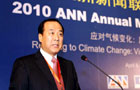
The recent soccer scandal in the Chinese Super League, the first professional league in China, has cast doubts over the effectiveness of commercialization. But Zheng still trusts the market. He says the government has not managed the soccer league properly, and independent club unions would be self-regulatory and self-disciplined because they would be responsible for their success.
He emphasizes the importance of PE in schools. He suggests the Ministry of Education take the responsibility of PE in schools while the General Administration of Sports is transformed into an Olympics-specific bureau. Schools today have a poor PE record. Many schools in big cities lack basic sport facilities such as a playground, and PE classes in a large number of county high schools exist only in name.
A law should be passed, he says, prescribing the basic facilities and time needed for PE in schools.
|
||||


But if the juguo system is changed, China will win fewer medals. Can we accept that? Zheng says the Beijing Olympics offered the best opportunity to reform the system. The West regarded China as "the sick man of East Asia" in the 19th and early 20th century, so Chinese have been desperate to prove themselves at international sport competitions to get rid of this racial slur.
The fact is China has already proved the Western countries wrong by winning more medals than any one of them at the Olympics. The Beijing Games was the crowning glory for China. Now that Chinese people don't need anymore Olympic glory, the focus should be shifted from elite to popular sports. In fact, right after the Beijing Games he suggested that China end its juguo system and divert the resources toward popular sports.
Contrary to Zheng's suggestion, however, it is business as usual on China's sports fields.
Many sports officials have been defending the "ancient regime" ardently. As a result, no meaningful reform has been attempted.
But can't that be done after the London Olympics?
It is wrong to link Olympic glory with national power. Though the erstwhile Soviet Union and German Democratic Republic ranked among the top three at the Olympics in 1970s and 1980s (except the 1984 Los Angeles Games, which they boycotted), it did not prevent their demise.
Hence, it is time the Chinese government let sports shed its extra baggage and return to its original essence: an indispensable lifestyle.
(China Daily 04/08/2010 page9)