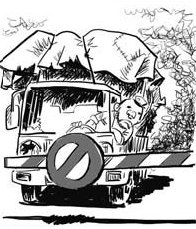
OPINION> Li Xing

|
OPINION> Li Xing
|
|
Growth is good but it must be green
By Li Xing (China Daily)
Updated: 2009-03-26 07:46
With the onslaught of the financial crisis last October, politicians and economists immediately began to blame Americans for consuming too much and Chinese for saving too much. Whoever is at fault, China has quickly learned that it can no longer depend on growing exports to drive its economy. The phrase "boost domestic consumption" is now on the lips of almost every government official, as it is deemed one of the keys to stimulating the nation's economic development. Various policies have been proposed to drive up consumption in China; some of these are now starting to bear fruit. For example, the Yayuncun auto sales center, the largest of its kind in Beijing, has seen its sales of small sedans rise dramatically, following a reduction in the sales tax on small-engine passenger cars. According to auto industry figures, some 827,600 vehicles were sold last month, an increase of 24.7 percent over February 2008. Some models sold out so quickly that customers now have to wait several weeks for delivery. Meanwhile, a national campaign has been mounted in the countryside to encourage farmers to buy electrical appliances. On TV, farmers are seen installing refrigerators or LCD TV sets at home and hauling away new machines that can clean potatoes, all bought at discounted prices with coupons provided by local governments. Amid the clamor for more consumption, I think there has been too little discussion of how to encourage green consumption. During the 2009 China development conference over the weekend, one journalist remarked that very few Chinese scholars had expressed concern over how the nation's stimulus plans will affect the environment. Only Ian Davis, managing director of McKinsey & Company, cautioned China against following the American path of consumption.
True, overall spending among individual Chinese is still very low. According to Worldsalaries.org, an average American in 2005 spent about $1,068 on health, $6,072 on housing, $2,543 on food, $754 on clothing, $372 on education and $3,336 on transportation; the average Chinese, meanwhile, spent about $159 on health, $440 on housing, $932 on food, $191 on clothing and $248 on transportation. Davis makes a good point, however. We simply cannot afford to repeat the mistakes the Americans and other Westerners have made. The world does not have enough resources to allow everyone to enjoy such a lifestyle. A visit to Houbajia village in Beijing reveals how poor we still are at dealing with old computers, TV sets, and other electronic gadgets we have left behind in our pursuit of newer models and faster machines. Ironically, the village lies barely 1.5 kilometers from Zhongguancun, where countless electronics stores sell whatever new gadgets the world has churned out. As major cities cope with clogged streets, it was not surprising to hear Lawrence J. Lau, economist and president of the Chinese University of Hong Kong, say on Saturday that it would be disastrous if every Chinese household were to own a car. I've traveled in the US a few times and cannot forget the sight of huge salvage yards where junk cars are piled up high. I doubt that cities like Beijing, which are already facing problems with waste treatment, can afford to start dumping old cars. In our drive to increase domestic demand, we must promote a "green" way of life and not simply push for more consumption. Above all, we must find ways to safely recycle industrial and electronic waste. We cannot wait until we find ourselves surrounded by mountains of plastics, e-waste, or junk cars. E-mail: lixing@chinadaily.com.cn |