OPINION> Chen Weihua

|
OPINION> Chen Weihua
|
|
Uprooting bad manners a tough task
By Chen Weihua (China Daily)
Updated: 2009-02-21 08:03
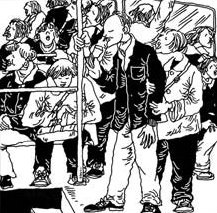
A 50-something man leaps from almost 2 meters away to grab a seat a woman has just left. You have been standing outside your house for 20 minutes waiting for a taxi, when a young woman casually cuts in to take the cab you flagged down. Seeing you rushing towards the elevator, a man already inside chooses to press the "close door" button instead of the other one to shut you out. I could give you countless examples like these, which happen in Shanghai every day. It is a city that's about to host the World Expo next year. To host a successful expo, authorities have been sprucing up the city for several years. Decorating stores, building facades in the city center, landscaping and re-landscaping public areas, constructing a massive subway network, they're doing it all. The Pudong airport has been expanded. The futuristic Lujiazui skyline is growing even higher. New subway lines open every few months. The fast-changing Chinese city keeps taking on a new look, promising to floor some 70 million domestic and foreign visitors expected during the six-month expo fanfare. Aside from infrastructure and other hardware, Shanghai is also investing huge resources in a bid to change the bad habits of its residents. Inspection teams, comprising of ordinary residents, comb the city every day to find things that might harm Shanghai's image during the expo - anything from unlicensed street vendors blocking traffic to garbage stations left unattended for a long time to dog poops in residential areas. The local TV station also runs a program on the uncivilized behavior of the local citizens the teams find.
The often-annoying video screens in buses also teach etiquettes to millions of passengers, from proper table manners to the dangers of littering from your apartment windows. But compared with the huge improvement in infrastructure and street facade, there is little progress in changing people's deep-rooted habits. Many people still jaywalk. Many bus riders still don't give seats to people in need. And smoking in public areas is still a common sight. As the Chinese saying goes, it takes 10 years to grow a tree, but a hundred years to bring up a generation of good men. Deep-rooted bad manners just cannot be uprooted easily. And the difficulty of such a task has obviously been underestimated. After more than a decade of promoting the "Seven Nots" campaign - no spitting, no littering, no vandalism of public property, no damaging greenery, no jaywalking, no smoking in public places and no use of dirty words, Shanghai is still struggling to get rid of these eyesores. It might truly take a generation or longer to wipe out these bad habits. It seems that the biggest challenge for a successful expo is not the raging global economic crisis, or the city's air pollution or traffic jams, but bad manners that will make the Shanghai experience for millions of visitors less pleasant. With a prolonged massive campaign, Beijing achieved a great deal in cultivating public civility ahead of the Olympic Games. Shanghai could learn from the success by showing more commitment and escalating its campaigns. Some campaigns, however, are absolutely unnecessary, such as the ban on drying clothes in the open or driving away newspaper and breakfast vendors. There are only a few more than 400 days to go before Shanghai hosts its largest event ever. It is important to give people from all over the world a cheerful experience. But discarding bad manners is not just for the expo party. It is crucial for our society. E-mail: chenweihua@chinadaily.com.cn |