OPINION> Chen Weihua

|
OPINION> Chen Weihua
|
|
Beijing should give Shanghai a ticket to ride
By Chen Weihua (China Daily)
Updated: 2008-11-08 08:00 Shanghai, which is waging an uphill battle against uncivilized behavior on its public transport system in the days leading up to the 2010 World Expo, should send its residents on a pilgrimage to post-Olympic Beijing.
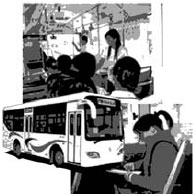
While queuing for a taxi outside the Shanghai Science and Technology Museum made headlines this week in the eastern metropolis, queues for buses and the subway are now routine in the capital these days. In Shanghai, everyone elbows their way on to buses and the subway, with no respect for others. Once inside, people face further pushing since no one bothers to excuse themselves when getting off. In Beijing, the situation is completely different. People get ready before reaching their destination. Words like "excuse me" and "thank you" are used all the time. The happiest passengers riding the Beijing public transit system must be the elderly who are offered a seat no matter how crowded it is. The way older people are respected and treated like emperors in Beijing must startle Shanghai officials, sociologists and columnists, who are trying hard these days to figure out why local youngsters will sit in the yellow seats reserved for the elderly, pregnant women, children and the physically challenged, turning a blind eye to the people in need of a seat. In Beijing, bus conductors play a vital role in ensuring a comfortable ride for every passenger. They are extremely polite. They also set good examples by offering their seats to the needy whenever necessary, a rare sight in Shanghai. In Shanghai, conductors, only available on a small number of buses, like to yell "kuai" (hurry up) at every person boarding and alighting. Even if you did it with speed, it would not be quick enough for them. All they do is really encourage a mood of hostility. Many of the bus conductors in Shanghai also treat senior citizens as a nuisance since they often move slower than the young.
Also, the free public transit pass for senior citizens in Beijing is much more considerate. It allows people aged 65 and older to travel 24 hours, seven days a week. In Shanghai, the pass is issued to people over the age of 70 and cannot be used in the morning or late afternoon rush hours. The rationale - senior citizens should not fight with the young going to and from work - implies the elderly are useless, an insult to their lifelong contribution to society. I doubt any young person would want to be treated in this manner when they get old. Prior to the Olympics, I thought the biggest challenge facing Beijing was its inability to instill good public order and manners. What I have experienced of its transportation system in the past month has proved me utterly wrong. Given the rivalry between the two largest cities in the country, I have to say Shanghai is losing the battle to Beijing, in terms of cultivating public civility. I am not a Beijinger lashing out at Shanghai either. As a local Shanghainese, who was born and raised in the metropolis, I hope to witness the same change I have seen in Beijing when I return to my city in two months. It must be a puzzle to many why several massive public civility campaigns launched in Shanghai since the 1990s have made little progress. If it cannot fix this problem as Beijing has, it will be the biggest obstacle to a successful World Expo, titled "Better City, Better Life". I want Shanghai to prove me wrong on the issue. In the meantime, I hope all Shanghainese get the opportunity to travel on a bus in Beijing. chenweihua@chinadaily.com.cn (China Daily 11/08/2008 page4) |