OPINION> Commentary

|
OPINION> Commentary
|
|
For US women warriors, deep wounds, little care
By Helen Benedict (China Daily)
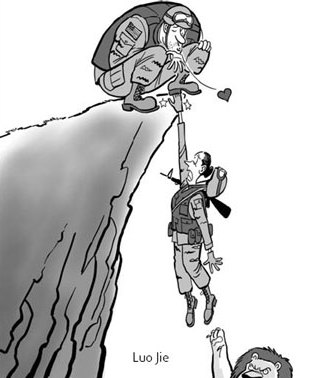
Updated: 2008-06-12 07:49 As an ever-increasing number of mentally and physically wounded soldiers return from Iraq, the Department of Veterans Affairs faces a pressing crisis: women traumatized not only by combat but also by sexual assault and harassment from their fellow service members. Sadly, the department is failing to fully deal with this problem. Women make up some 15 percent of the US active duty forces, and 11 percent of the soldiers in Iraq and Afghanistan. Nearly a third of female veterans say they were sexually assaulted or raped while in the military, and 71 percent to 90 percent say they were sexually harassed by the men with whom they served. This sort of abuse drastically increases the risk and intensity of post-traumatic stress disorder. One study found that female soldiers who were sexually assaulted were nine times more likely to show symptoms of this disorder than those who weren't. Sexual harassment by itself is so destructive, another study revealed, it causes the same rates of post-traumatic stress in women as combat does in men. And rape can lead to other medical crises, including diabetes, asthma, chronic pelvic pain, eating disorders, miscarriages and hypertension. The threat of post-traumatic stress has risen in recent years as women's roles in war have changed. More of them now come under fire, suffer battle wounds and kill the enemy, just as men do. As women return for repeat tours, usually redeploying with their same units, many must go back to war with the same man (or men) who abused them. This leaves these women as threatened by their own comrades as by the war itself. Yet the combination of sexual assault and combat has barely been acknowledged or studied. Last month, when the RAND Corp released the biggest non-military survey of the mental health of troops since 2001, it unwittingly reflected this lack of research. The survey found that women suffer from higher rates of post-traumatic stress disorder and depression than men do, but it neglected to look into why this might be, and asked no questions about abuse from fellow soldiers. Terri Tanielian, the project's co-editor, told me that RAND needs more money to explore these higher rates of trauma among women.
As the more than 191,500 women who have served in the Middle East since 2001 return home, they will increasingly flood the Veterans Affairs system. To ask those who need help for post-traumatic stress disorder to turn to a typical Veterans Affairs hospital, built in the 1950s and designed to treat men, is untenable. Women who have been raped or sexually assaulted often cannot face therapy groups or medical facilities full of men. At the moment, the Department of Veterans Affairs operates only six inpatient post-traumatic stress disorder programs specifically for women. And although all 153 department-run hospitals will treat women, only 22 have stand-alone women's clinics that offer a full range of medical and psychological services. This number of clinics may seem adequate for the 1.7 million female veterans currently at home, especially since they represent only 7.2 percent of all veterans at the moment, but it isn't. Many clinics are miles from where soldiers live, and many more are open only a few hours a week and lack staff members trained to deal with sexual assault, let alone assault combined with combat trauma. The Department of Veterans Affairs says it plans to open more clinics for post-traumatic stress disorder, but how many will be only for women remains undecided. Women are the fastest-growing group of veterans, and by 2020 they are projected to account for 20 percent of all veterans under the age of 45. Not all of these women will have suffered sexual assault, but many will have medical or psychological needs that conventional department hospitals cannot meet. The Department of Veterans Affairs must open more comprehensive women's health clinics, designate more facilities for women who have endured both combat and military sexual trauma and finance more support groups specifically for female combat veterans. The best way to honor all of our soldiers is to do what we can to help them mend. The author is a professor of journalism at Columbia The New York Times Syndicate (China Daily 06/12/2008 page9) |