OPINION> Raymond Zhou

|
OPINION> Raymond Zhou
|
|
Grief shared is half the grief
By Raymond Zhou (China Daily)
Updated: 2008-05-24 07:44
Monday afternoon was a very special occasion. The three-minute silence of mourning was one of the most memorable moments of my life. About 10 minutes before 2:28 pm, I heard a crowd had gathered in front of our building. So, I joined them. Surprisingly, there was no crowd control. The only instruction I heard was for someone in a bright shirt to move to the back row, and he murmured some apology for not dressing properly. More people filed downstairs. Then all vehicles on the street stopped, blaring their horns. I took a peep and noticed that even pedestrians were lowering their heads, though facing different directions. Many around me wiped their eyes. After that, we all filed back into the building silently. A more moving ritual I have not seen in this country. It was therapeutic because for one week people did not know how to mourn publicly - the last time we did that was in 1976. I do not remember who said "grief shared is half the grief", but it was very true. Without the ceremony, it would have been difficult for us to get back to normal life. We as a nation were simply in dire need of a collective outlet for the sea of tears inside us. For a "ritual", this was quite spontaneous and optional. Except for organizations with flagpoles, everything was left to individual decisions. You could pause and bow your head, or you could carry on what you were doing; you could honk or not honk. Nobody was forcing you, and as a matter of fact nobody criticized you for not complying with the majority - at least as far as I know.
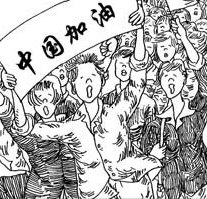
Since childhood, we have been through numerous rituals and ceremonies where we did what we were told to do. This was one exception. The great majority of people participated in something because they truly wanted to. It took the government only to designate the time. And what timing! Seven days to the exact minute. In folk tradition, the seventh day is the first big mark for remembrance of the dead. A week had gone by and people were simply searching for ways to express their deep sorrow, but not knowing exactly what was appropriate. On May 13, the day after the big quake, I received a short message from a professor who "strongly suggested" that we lower the national flag to half-mast and suspend all entertainment activities, among other requests. I thought his proposal was great, but had little chance of turning into reality because the government was so immersed in rescue and relief. Who would pay attention to such protocol? Besides, this kind of observance is reserved for people like late Chairman Mao Zedong. Of course, there are other more spontaneous channels for grief and compassion like attending candlelight vigils and donation drives. There was no lack of heartbreaking and heartwarming feelings. What puzzled me was a shortage of verbal expressions - songs and slogans - that would fit the solemnity. We do not have music masterpieces like Beethoven's Ninth Symphony that can elevate a tragedy to a supreme bonding of humanity. Many of the songs used by the televised donation gala were festive in nature. And the singers did not even bother to revise the lyrics to reflect the current disaster. It turned out the National Anthem was one of the few that was appropriate. The "Go China!" slogan is probably more suitable for the Olympics than for a national mourning. Yes, we will triumph over the hardship. But "Go!" suggests continuation of something good, such as scoring a goal, or a change of pace from slow to fast. It is strange to ask a survivor to "Go". If only we had a catchy Chinese phrase for "We shall overcome!" E-mail: raymondzhou@chinadaily.com.cn (China Daily 05/24/2008 page8) |