
Time to cut food wastage
Updated: 2008-04-10 07:29
A global food catastrophe is looming. Major grain exporters are restricting their overseas shipment of agricultural products so that they can meet growing domestic consumption.
The sudden growth of the bio-energy industry in many parts of the world creates imbalances in the food trade and spurs sharp increases in wheat and maize prices.
The international prices of rice are also going up. Fortunately, the Republic of Korea (ROK) is self-sufficient in this, our staple grain, mainly because of the declining domestic demand, as people's diet becomes more Westernized.
On the other hand, the ever-growing dependence on imported food both for home meals and at restaurants has exposed the country to the threats of the international food crisis.
Huge amounts of food - much of which is purchased via foreign exchange and transported thousands of kilometers by sea and air - are discarded before or after being cooked because of improper distribution systems and the simple fact that much is often left uneaten on the plate.
Experts estimate that from 5 to 10 trillion won, or $5 to $10 billion, is the total value of food wasted each year in the ROK. For the United States, where 40 to 50 percent of food is left uneaten, the most liberal estimate is $43 billion.
During lunchtime at school, so many students, who have not been properly educated by their parents about eating manners, waste a lot of what they are served.
At restaurants, particularly traditional ones, the numerous side dishes are often taken away from tables only half eaten. And huge volumes are wasted in the course of distribution, as is evidenced by the heaps of vegetables rotting in markets.
Careless inventory control and poor marketing result in large amounts of processed food items passing their expiration date and being thrown away.
Calls to prevent such squandering are coming from major caterers who are more sensitive about international food prices than the general public.
Kim Jin-soo, president of CJ CheilJedang, a food firm, has proposed a campaign to change the dietary ways of Koreans, who tend to prepare far more food than they actually eat.
Food waste is everywhere, in homes, restaurants and even at military bases. Certainly, we need an impressive campaign by civic groups, the government and schools to reduce this wastefulness.
For a long time since the people began talking about becoming an affluent society, government officials and civic activists have paid little attention to the seemingly mundane theme of thriftiness with food.
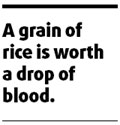
Everyone needs to be conscious of the global food situation. Policymakers will have to prepare short- and long-term measures to cope with the food-supply problems, and, in the meantime, our restaurateurs, cooks at home, and distributors of produce should begin a fresh drive to prevent waste. As the main slogan for the campaign, we may borrow the old saying: "A grain of rice is worth a drop of blood."
The Korea Herald
(China Daily 04/10/2008 page9)
|
||

|
|
|
|