Workers find their voice with poetry
Updated: 2007-08-16 07:11
Poetry is not my cup of tea. I always believe the hustle and bustle associated with this era of globalization leaves little time or inspiration for such writing.
After all, Poetry 101 says the genre demands careful word choices from a large vocabulary, intricate structures, meanings and rhythmic devices.

During the recent Qinghai International Poetry Festival, established Chinese poets mulled the question of whether contemporary Chinese poetry would continue to decline or revive at a time when the Internet and virtual world rule the day.
But I am wrong. A group of new poets have emerged from among the migrant workers away from their rural homes in urban centers.
Just as American Modernist poet Wallace Stevens said, "poetry is the statement of a relation between a man and the world", their works give full expression to their hard labor in workshops or construction sites, their aspirations and disappointments, their naivety and learning.
It is hard to forget their verses, not because the life they depict is rather shocking:
From Sichuan to Guangdong/I am only an itinerant.
Encircled among assembly lines
Their teeth leave their marks in the hands, on the body and into the bones
But because no matter how many bodily and mental scars their life and work in urban centers have left on them, as Zheng Xiaoqiong in her poem describes, they still do not belong.
What amazes me is the true life stories of some of the poets, such as Zheng, who now works as a sales clerk in a factory making metal tools. She won a literary prize last year from China's top literary magazine, People's Literature.
However, she never tells her co-workers she writes, for fear they will ask questions and her boss might fire her for doing things other than her factory job. She is known as No 245 among her co-workers.
Zheng could have found an office job easily, the local media have reported, but she has declined.
"Without the pain, my poetry would be without soul," she says.
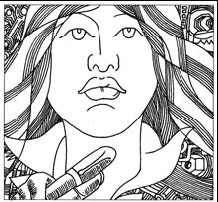
Zheng and other poets who have risen by penning the lives of migrant workers do not have time to think about whether their words will die or survive. They just keep writing. They even sneer at the critics - almost all urbanites - for putting such labels as "migrant worker-poet" on them.
"It is common sense that writers write from their own life experiences, emotions and existence," Xie Xiangnan, another young poet, said. "No one is entitled to give labels to others."
Above all, as their verses appear in print or on the Internet, they force people to reflect on how economic development and social transformation has changed the lives and mindsets of the rural populace.
In particular they make people ponder why there is still such a huge gap and alienation between urban people and migrant workers, who make urban life easier and who transform urban centers into modern metropolises. However much they contribute, they are treated differently because they don't hold college diplomas or have permanent residence in the cities they work, either as laborers or editors and writers.
"We are birds without feet, without knowing where to settle or call home," Zheng said.
While we listen to their sadness, frustration and discoveries, governments at all levels as well as society as a whole should take concrete steps to narrow the urban-rural divide not only in principle but also within the whole social structure.
That is truly the foundation for a harmonious society.
E-mail: lixing@chinadaily.com.cn
(China Daily 08/16/2007 page10)
|
|
|
||

|
|
|
|