Cheap housing can narrow HK wealth gap
By HONG LIANG (China Daily)Updated: 2007-07-03 06:17
 The much talked about widening wealth gap in Hong Kong has raised the
question that touches on the very heart of the city's economic policy: What role
does the government have in wealth distribution?
The much talked about widening wealth gap in Hong Kong has raised the
question that touches on the very heart of the city's economic policy: What role
does the government have in wealth distribution?
Even the most ardent disciples of the guiding principle of small government, big businesses have agreed that the worsening economic injustice, as perceived by an increasing number of people in Hong Kong, can give rise to social discontent, which cannot be ignored by any responsible government, big or small.
There is no doubt that the Hong Kong government is well aware of the situation. Indeed, the Hong Kong government, over the past many years, has done quite a lot in addressing the issue, albeit indirectly through housing subsidies, affordable medical service and various welfare benefits to the most needy.
As the wealth gap continues to widen, the call for more
direct government intervention is getting louder. But other than moral
persuasion, there is little the government can do in achieving a more even
distribution of wealth in Hong Kong. In the context of the guiding economic
principle of a free market environment, the room for direct intervention is
extremely limited. 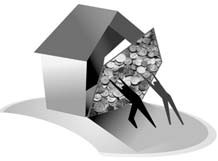
In many developed economies, the problems arising from a widening of the wealth gap between the rich and poor can be addressed, to some extent at least, through fiscal policies. But making any material changes to Hong Kong's long-cherished low and simple tax regime could risk undermining foreign and domestic investors' confidence in the government's commitment to preserving the very fabric of the market-oriented economy.
With the salary tax burden falling on no more than 20 percent of the working population, any discussion of taxing the rich to subsidize the poor seems rather pointless. The government did on numerous occasions raise the rates of corporate and salary taxes to cover budgetary shortfalls in economic down-cycles. It was always understood that such adjustments were nothing more than short-term budgetary fine-tuning that would be reversed once the economic tide began to turn.
There is, of course, the strong argument for the government to widen the tax base. New sources of revenue are needed to finance the improvement and expansion of public welfare programs, primarily medical services, to help those hardest hit by the worsening economic imbalance.
But an earlier attempt to introduce a sales tax failed because it was deemed by the public to be unfair to low-income families which must spend a larger proportion of their household income on food and other necessities than families in the higher-income bracket.
In considering other new taxes, the government is constrained by strict guiding principles which were designed to preserve the free-market environment and maintain Hong Kong's economic competitiveness.
But the government is far from helpless in tackling the wealth gap issue. As the biggest landlord in Hong Kong, it holds the key to what has been a primary source of wealth - property.
Many economists have suggested that the government expand its low-cost housing program in cooperation with the private sector as it has been doing all along. Housing typically accounts for a large portion of an average family's household expenditure, especially those in the lower income bracket. Providing quality housing at affordable prices to the less well-to-do families goes a long way in addressing the social problems brought about by raw market forces.
This was the role that the Hong Kong government has been playing for many years in helping to reduce the economic imbalance that was taken for granted in a free market environment. All it needs now is for the government to expand this role.
E-mail: jamesleung@chinadaily.com.cn
(China Daily 07/03/2007 page10)
|
||

|
|