Raymond Zhou
Ad slogans a matter of taste
By Raymond Zhou (China Daily)
Updated: 2007-05-19 17:08
 |
Large Medium Small |
In a recent discussion on the supervision of outdoor advertising, Beijing Mayor Wang Qishan remarked that the repeated use of certain words on real estate billboards has marred the image of the capital city.
These words include "luxury", "ultimate", "deluxe", "exclusive", etc. They all suggest the lifestyle of the super rich.
 Obviously the huddled masses cannot afford these properties. As a matter of fact, calculated by average income, even a not-so-luxury apartment is out of the reach of most residents. For example, a 50-square-meter unit, priced at 10,000 yuan per square meter, will take 8.3 years for a person who earns 5,000 yuan a month.
If you dissect the political jargon, these adverts upset ordinary people. The poor may already be numb, or they would have been driven crazy. The segment of society that is really distressed may be the middle class, including young professionals, who see themselves as economically enslaved for a lifetime to real estate developers.
The issue is not simply a poor versus rich dichotomy. From the perspective of freedom of expression, I don't think advertising slogans should be regulated. They are designed to hook, stimulate, and provoke. If ad copy, especially the tagline, reads like a government document, the ad agency would probably be fired.
Ad slogans have frequently been criticized as damaging linguistic purity. They twist idioms and proverbs. They coin new words that are not yet enshrined in the dictionary. They make puns that are too titillating for some to accept.
However, they have done a good job reaching their target audience. Housing ads that flaunt wealth and status reflect - as much as steer - customer mentality. Many properties adopt foreign names, such as Yosemite and Napa Valley, because people tend to associate such Western style with top quality and privilege.
In the 1990s, a southern city outlawed the use of "president" and "imperial" in property names. That did not dent the craving for showing off wealth. Banning the current batch of ostentatious adjectives would not achieve the desired effect either. If anything, a new regulation of this nature may only make the advertisers less reliant on clichs and make them more imaginative in terms of how they express themselves.
Basically this is a question of taste. In a mature society displaying wealth is generally considered bad taste. But for those who have just shaken off the shackles of poverty, there is a constant need for reaffirmation as if one wakes up from a bad dream and does not stop biting his fingers.
Even in the United States, such flaunting still exists, albeit more subtly. Real estate ads use generic terms such as "top-quality" and "spacious" to attract the lower-income crowd and more specific descriptions such as "granite" and "gated" to denote higher class. One needs a sharp-eyed agent to wade through the warm and fuzzy facade and get to their true meaning.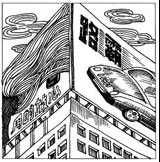
What makes China's housing adjectives such a pain in the neck are housing prices, not the over-the-top, kitschy exaggerations which are common in most realms of Chinese expression. Yet, government policies rarely alleviate that woe.
Let's imagine that all these real estate ads are replaced with ads for arts and antiques. They also cater to the super rich. Yet they would not elicit the same response from drivers and pedestrians. The reason is simple: arts and antiques are not essentials in our lives. The rich can play the wealth accumulation game without affecting the living standards of the masses.
But when housing is played like a card game, wide swaths of our society are affected. The pompous ad slogans only become the frost on top of the snow, so to speak, aggravating the sinking and frozen feeling.
Email: Raymondzhou@chinadaily.com.cn
(China Daily 05/19/2007 page4)
| 分享按鈕 |