OLYMPICS/ self introduction
Chinese dishes get English names ahead of Olympics
(Xinhua)
Updated: 2007-08-31 14:57
BEIJING, August 31 -- Foreigners will find it easier to order a meal in Beijing during the Olympics as most dishes and drinks will have proper English translations.
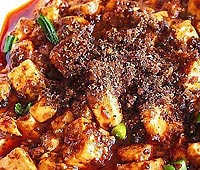
The MapoTofu |
Beijing Tourism Bureau has released a list of translations for 2,753 dishes and drinks to solicit public opinions.
The list, once finally fixed, will be used in restaurants across the country, to replace confusing, even ridiculous translations, according to the bureau.
In preparing for the 2008 Olympic Games, the city has also moved to standardize English translations of public facilities, including road signs, and the hotel service.
Bad translations of Chinese dishes are headaches for foreign epicures. There used to be translations like "Virgin Chicken" and "Burnt Lion's Head", which are actually dishes based on young chicken and pork ball resembling lion's head. These translations either scare or embarrass foreign customers and may cause misunderstanding on China's diet habits.
A team set up by the Beijing Municipal Foreign Affairs Office and Beijing Tourism Bureau has been working on the problem since March last year, backed by a committee of 20 language experts and catering service managers.
"The names of Chinese dishes have long been part of our culture. We should translate them in a way that people of other cultures can understand them," said Feng Dongming, the head of this translation program and vice dean of Tourism School of Beijing Union University.
The names of Chinese dishes have combined cultural and artistic elements in them, some with historical, geographical and political background, some with origins from Chinese fairy tales and folk tales. Often the dishes are named with stories understood only by people who know their culture well.
Translators have divided the dish names into four catalogues: named by materials, by cooking method, by tastes, by name of a person or a place.
Translation of the first type is done simply by linking the the name of each material with a hyphen. For instance, "Mushroom-Duck's Foot" and "AmentJuice-BalsamPear", which helps foreign guests to recognize the materials and content of the dish.
The second type is translated according to cooking methods. Some Chinese cooking methods are unique and do not exist in other countries, like stew, quick-fry or saute, braise, and chilioil-boil. The translators now put the method in the beginning, followed by the material, forming a verb-noun phrase. For instance, "Stewed Diced Pork and Sweet Potatoes" and "Fish Filets in Hot Chilioil".
The third type begins with the taste or texture of the food. For example, "Crispy Chicken".
The last type is named after either its creator or the place it originates from. Such examples include "MapoTofu", which is a kind of Tofu invented by Mapo, name of a Chinese woman.
The committee also plans to launch a training program to equip waiters and waitresses with knowledge of the dish names in case customers demand explanations.
|