Beijing has stepped up its efforts to eradicate queue-jumping since February, when city officials made the 11th of every month a day of voluntarily waiting in line.
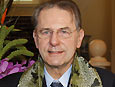
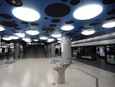
Tens of thousands of volunteers encouraged people to queue up to use public transport. Groups of volunteers formed lines at subway stations for commuters to follow their example. Five army generals distributed flyers to promote queuing at a bus stop in western Beijing, while an Olympic champion draped with ribbons bearing slogans thanked passengers for standing in line at a subway station in the east.
With officials hoping to clean up the city's image before the Olympics, posters bearing the number 11 (to signify two orderly queues) will soon be ubiquitous at all public places.
Of course, it would be better to have no queues in the first place.
Queues form because resources are limited, or as a result of inefficiency or disorganization.
However, for public transport operators, it's a matter of balancing different needs and considerations. Too many buses may create idle service capacity outside rush hours, meaning that it makes economic sense to have queues.
In 2005, a total of 18,530 buses transported 4.5 billion people around Beijing. Each on average moved 665 people around each day, including on holidays and weekends.
Another challenge is to make queuing more tolerable.
Beijing's subway system could improve its service by announcing waiting times for incoming trains, like other major cities in the world. Some forms of diversion may also be welcome, such as providing free newspapers.
Unfortunately, bus stops and subway stations are not the only culprits. Customers at banks, supermarket checkouts and hospitals also face long waiting times.
Some queuing can be seen as a symptom of bureaucratic red tape, as well as reflective of a poor service standard. For example, there is no arrangement for people to pay their utility bills by direct debit, so they have to visit their local bank to do so.
While acknowledging that pushing and shoving is rude and an affront to public order, Professor Guan Xinping, a sociologist at Nankai University, believes the "queuing" campaign will help the service sector become more efficient.
Guan has suggested a three-step cure to queue-jumping. First, public service needs to be improved; second, waiting in line should be made more pleasant; third, respect for public order should be promoted.
However, Guan stressed that reduced waiting times must be the ultimate goal.
Bus operators are now bent on introducing queuing discipline to 1,805 bus stops within the Fifth Ring Road. As such, they have already marked 5,500 waiting spaces and put up thousands of banners and billboards to remind passengers of the virtue of queuing up.
But how will they help shorten or eliminate lines? Maybe officials and volunteers can clock waiting times and make sure buses arrive on time, while trying to keep the queue orderly and calm.