Japanese government offices have requested a record budget of $913 billion for fiscal 2018, with the Foreign Ministry seeking a bigger sum for the country's official development assistance, or ODA. In recent years, Japan has increased its ODA to countries along the routes of the China-proposed Silk Road Economic Belt and 21st Century Maritime Silk Road, which together comprise the Belt and Road Initiative. Alone as well as with India, Japan is trying to minimize China's influence in those countries and regions.

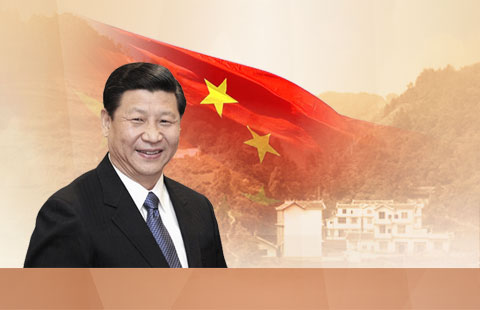
Neither Japan nor India has "joined" the Belt and Road Initiative, though Japan has shown interest in it in recent months. In 2013, President Xi Jinping unveiled the initiative which spans 60-odd countries across Asia, the Middle East, Europe and Africa.
During his Indian counterpart Narendra Modi's visit to Japan last November, Japanese Prime Minister Shinzo Abe unveiled a joint project called "Asia-Africa Growth Corridor" or the "freedom corridor", in a bid to build sea corridors to extend their influence from the Asia-Pacific to Africa.
Tokyo and New Delhi elevated their ties to a "special strategic and global partnership" in 2014. Japan has seeded a variety of projects in northeast India in sectors such as highways, power, water, sewage and natural resource management. And Modi has welcomed Japan's cooperation as it helps India's goal of building a gateway for Southeast Asia and "Act East" foreign policy.
In northeastern Sri Lanka, the two countries are expected to jointly expand the strategically located Trincomalee port. They are also likely to work together to develop the Dawei port along the Thai-Myanmar border. And Japan is expected to join India in its foray into Iran to expand the strategically important Chabahar port and the adjoining special economic zone.
The Chabahar project is seen as a counterweight to China's support for building the Gwadar port, barely 75 kilometers away, in Pakistan, which would also help connect Japan with Central Asia, a landlocked region with rich resources, newly discovered economic potential and growing population. Japan has made efforts to compete with China in all these areas.
Abe visited five Central Asian countries-Turkmenistan, Uzbekistan, Kazakhstan, Tajikistan and Kyrgyzstan - in 2015, inking deals on energy, agriculture and infrastructure. Tokyo is also actively planning to pour billions of dollars in ODA into infrastructure projects in Africa.
Japan is now more focused on South and East African countries along the Indian Ocean. In those countries, it not only runs trade surpluses and sees signs of new resources but also sees its private companies getting more heavily involved in manufacturing and construction.
Japan and India held a separate session with stakeholders from Africa on the sidelines of the African Development Bank meeting in Ahmedabad, India, on May 24 to discuss joint projects on capacity building and infrastructure in Africa. At a ministerial meeting of the Tokyo International Conference on African Development in Mozambique on August 24-25, Japanese Foreign Minister Taro Kono told African representatives that Japan will conclude new bilateral investment treaties with 13 countries, including Algeria and Morocco.
That the "freedom corridor" is taking shape just months after China hosted the Belt and Road Forum for International Cooperation in May, as the African Business magazine put it, has raised suspicions that Japan and India are more interested in using their joint project as a counter-measure to China's initiative.
The investment and technical know-how from China, Japan and India will definitely improve the well-being of people in the vast areas their initiatives cover. But the Tokyo-New Delhi strategy based on a motive to undermine Beijing's influence will widen the rift between the two sides. The three countries should have combined forces for the betterment of the region and beyond. And more importantly, their initiatives should not evolve into competing adversarial power blocs.
The author is China Daily Tokyo bureau chief.
caihong@chinadaily.com.cn




Copyright 1995 - . All rights reserved. The content (including but not limited to text, photo, multimedia information, etc) published in this site belongs to China Daily Information Co (CDIC). Without written authorization from CDIC, such content shall not be republished or used in any form. Note: Browsers with 1024*768 or higher resolution are suggested for this site.
License for publishing multimedia online 0108263 Registration Number: 130349