The just-concluded G20 summit sent a positive signal that the world's major economies, of which China is a bellwether, will push for "interconnected" growth, enhance economic cooperation and improve global governance. The summit, themed "Shaping an Interconnected World", was held in Hamburg, Germany, amid news that the global economy has recorded its best performance since the 2008 global financial crisis.
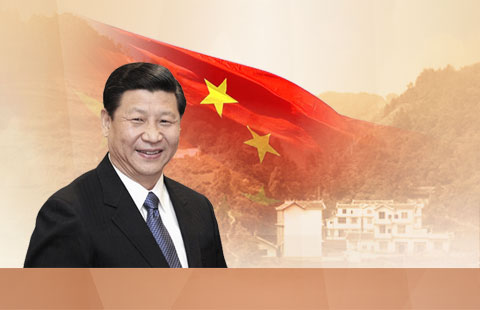
China's ideas and initiatives, articulated by President Xi Jinping in his speeches at the Hamburg summit and at a host of other international forums since 2013, are deemed by many G20 members as critical to leading global "interconnected" growth and advancing shared prosperity.
Determined to build a community of shared destiny for humankind, Xi raised in Hamburg a set of ideas to ensure a strong, sustainable, balanced and inclusive growth in accordance with the spirit of last year's G20 Leaders Summit in Hangzhou, East China's Zhejiang province.
Xi said further action is needed to push forward the global economy as it "is still plagued by deep-seated problems and faces many uncertainties and destabilizing factors". To build a more open world economy and realize greater inclusive global growth, he suggested that G20 support the multilateral trading arrangements and stay committed to openness and mutual benefit so as to increase the size of the global economic "pie".
On boosting inclusiveness, Xi said G20 members need to promote synergy between economic and social policies, address the mismatch between industrial upgrading, knowledge and skills, as well as ensure more equitable income distribution.
The president also stressed the need to improve global economic governance, urging the G20 members to strengthen macroeconomic policy coordination and forestall risks in financial markets.
In the face of the new global economic environment, the communiqu?? of the Hamburg summit absorbed many of Xi's ideas and the consensuses reached at last year's Hangzhou summit.
It is worth noting that compared with the previous year, the world economy has shown positive signs, although risks remain. The anti-globalization wave in some countries shows no sign of abating, while trade protectionism and isolationism continue to gather momentum and the threat of terrorism remains widespread.
The world is also facing a slew of common challenges such as people's displacement, poverty, hunger, health problems, unemployment, climate change, energy security and development imbalance, which undermine the stability and sustainability of the global economy. In an increasingly interconnected world, these challenges can no longer be managed by any one country alone.
China, as the world's second-largest economy, puts a premium on the credibility of its international commitment. And actions speak louder than words as China continues to deliver on its commitments, translating political consensuses into a driving force for reform and development.
A case in point is China's leading role in addressing the steel overcapacity. With supply-side reform being implemented unswervingly, China's economic growth is on a stable track. The upgrading and transformation of China's economy will help it become a strong engine of the world economy.
China is also actively promoting and implementing various political consensuses within the G20 framework. According to a research report, as of now, 80 percent of the consensuses reached at the Hangzhou summit have been implemented, the second-highest rate since G20's first summit in 2008.
According to the G20 Hamburg Action Plan, China will take more measures to improve its business environment, further facilitate investment, and reduce the burden on small and medium-sized enterprises.
As Xi reiterated at the Hamburg summit, concepts such as openness, cooperation, win-win results, joint consultation, joint construction and sharing, which the Belt and Road Initiative advocates are compatible with the G20's partnership spirit. And being complementary, they can jointly boost world economic development.
Proposed by Xi in 2013, the Belt and Road Initiative is aimed at building trade and infrastructure networks connecting Asia with Europe and Africa. The initiative comprises the Silk Road Economic Belt and the 21st Century Maritime Silk Road.
It is therefore clear that standing at a new starting point, China will play a greater role in shaping an interconnected world.




Copyright 1995 - . All rights reserved. The content (including but not limited to text, photo, multimedia information, etc) published in this site belongs to China Daily Information Co (CDIC). Without written authorization from CDIC, such content shall not be republished or used in any form. Note: Browsers with 1024*768 or higher resolution are suggested for this site.
License for publishing multimedia online 0108263 Registration Number: 130349