But authorities in London could learn a thing or two from the systems used in Beijing and Milan
I may be in the running for the title of world's most inept tourist. Who else would spend a month in Beijing and not see the Great Wall? Or, get arrested while trying to visit the Citadel in Vietnam's ancient capital of Hue? My latest exploit was trying to visit London's historic Hampton Court Palace by scheduled river bus, only to be foiled by unforeseen tidal issues on the River Thames.
But that's neither here nor there, because, for both China and the United Kingdom, tourism represents about 10 percent of GDP. That's a huge industry that has really only matured in the last 20 or 30 years, as people have found they have more disposable income and travel has become relatively easier.
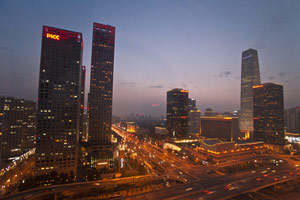
China and the UK both boast proud histories. In the case of China, well-restored monuments sit comfortably side-by-side with a truly staggering display of economic might: massive housing, transport and commercial buildings.
For the UK, London's icons, such as the Houses of Parliament, St. Paul's Cathedral and Westminster Abbey sit under the shadow (not literally) of the enormous tower blocks of bizarre shapes and sizes that have sprung up in the past 20 years or so.
I'm thinking of the Gherkin, the Shard, the Walkie-Talkie and the Cheesegrater, the nicknames bestowed by tongue-in-cheek London residents in reference to their design.
So, how do China and the UK handle their tourist attractions?
During my monthlong stay in Beijing, which admittedly was for work, I was impressed by a number of things.
Beijing residents, Chinese or foreign, may disagree, but I was impressed by the subway system. Signage is clearly marked in English and Chinese script. And on the train there's a helpful diagram with a moving red dot to signify the direction. London transport authorities, please note.
Tian'an men Square, the central focus of Beijing, bordered by the imposing Great Hall of the People and the Palace Museum, which many of us in the West call the Forbidden City, is understandably tightly controlled from a security point of view. Yet, despite the long queues, visitors passed through the turnstiles and metal detectors at a steady pace, watched over by security guards and official attendants.
The downside, for me at least, was the various touts posing as "students", who asked if they could improve their English by chatting with you, and who were inevitably trying to lure you into seeing a display of Chinese scrolls or paintings that you would be urged to buy. I've never been comfortable with that aspect of tourism.
London poses different problems - I never cease to be amazed at the number of people lining up to see such diverse attractions as Westminster Abbey and Madame Tussaud's Waxworks Museum.
In Italy, I was impressed by the system in place for those wanting to see Leonardo da Vinci's masterpiece in Milan, The Last Supper. The room is climate-controlled, and access is strictly regulated. True, there is a queue, but the authorities have put in place a system in which you buy and pre-book a viewing slot online. Even I was able to handle that.
I think the UK authorities should look at that for some of London's more popular attractions.
The author is managing editor, Europe, for China Daily. Contact the writer at chris@mail.chinadailyuk.com




Copyright 1995 - . All rights reserved. The content (including but not limited to text, photo, multimedia information, etc) published in this site belongs to China Daily Information Co (CDIC). Without written authorization from CDIC, such content shall not be republished or used in any form. Note: Browsers with 1024*768 or higher resolution are suggested for this site.
License for publishing multimedia online 0108263 Registration Number: 130349