Chinese archaeologists worked at more than 2,000 sites in 2016, and experts have selected the 10 best ones.
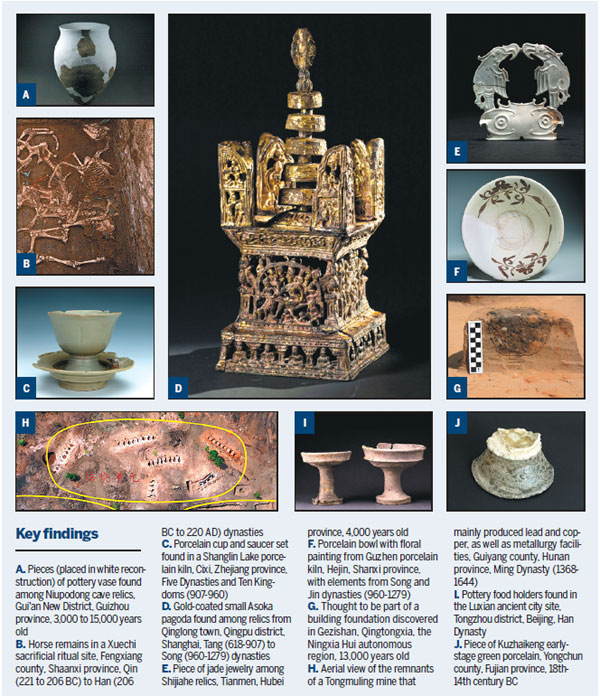
Among the Top 10 Archaeological Discoveries of China in 2016, which were announced on Wednesday, are the remains of a 2,000-year-old city unearthed on the outskirts of Beijing and items uncovered in the cradle of Shanghai that point to the ancient Maritime Silk Road.
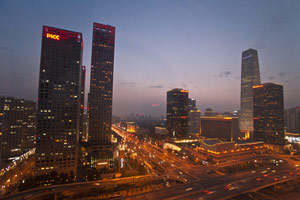
Remnants of the Han Dynasty (206 BC to 220 AD) city of Luxian, covering 350,000 square meters in the capital's Tongzhou district, are among the top finds. The site was discovered during urban construction work for Beijing's future administrative center.
"The basic layout of the ancient city has been figured out, and many important relics were found that show Beijing's early history, but a few more years will be needed to fully study the site with follow-up excavations," said Liu Qingzhu, one of the judges of the Top 10 finds and academic director of the Institute of Archaeology, affiliated with the Chinese Academy of Social Sciences.
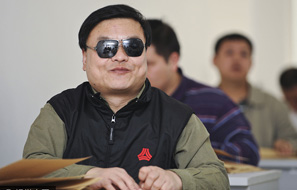
The judging panel was composed of 21 experts from institutions, including the Palace Museum, the National Museum of China and Peking University. They took part in this year's annual poll, which has been called "the Academy Awards of Chinese archaeology".
Liu said that town ruins from the Tang Dynasty (618-907) found in Shanghai's Qingpu district indicate a lesser-known direction of the ancient Maritime Silk Road trade route.
"Previous studies often focused on southern routes," Liu said. "Findings in the town not only unveiled an early stage city in Shanghai, but also a route leading to the Korean Peninsula and Japan."
Wang Wei, head of the Society of Chinese Archaeology, said preparation work for urban construction has been a main source of the discovery of archaeological sites, but Chinese archaeologists also have been trying to undertake projects away from cities.
That led to the discovery last year of some important prehistoric relics. At a 13,000-year-old site in the Ningxia Hui autonomous region, for instance, rare and exquisite ornaments made of ostrich eggs were excavated. This also is an award winner.
"People used to have a stereotype that there can hardly be any top-tier findings later than the Song Dynasty (960-1279)," he said. "But the time distribution of the 10 findings is more balanced this year."
Nevertheless, Wang said physical beauty is not a prerequisite to be among the Top 10.
"We place more emphasis on whether the findings are relevant in academic research, even if some objects are not that good looking from the public's points of view," he said.
Employing more study methods from the natural sciences has become a new trend in Chinese archaeology. For example, plant seeds were found among some sites and had to be identified and the chemical analysis of materials found at an ancient mining site was needed.
wangkaihao@chinadaily.com.cn




Copyright 1995 - . All rights reserved. The content (including but not limited to text, photo, multimedia information, etc) published in this site belongs to China Daily Information Co (CDIC). Without written authorization from CDIC, such content shall not be republished or used in any form. Note: Browsers with 1024*768 or higher resolution are suggested for this site.
License for publishing multimedia online 0108263 Registration Number: 130349