US experts advise not to focus too much on deficits and currency
US economists believe the focus by US President Donald Trump's administration on trade deficits with China and Chinese currency is the wrong approach.
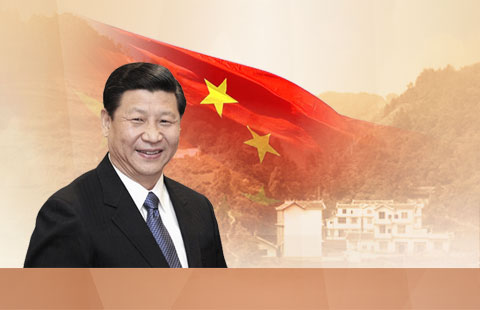
They made the comments after the first meeting between Trump and President Xi Jinping in Florida last week. Both the US and Chinese governments have spoken positively of the informal summit at Trump's Mar-a-Lago estate.
Larry Summers, a former US treasury secretary from 1999 to 2001, and an economic adviser to former president Barack Obama in 2009 and 2010, compared the talk in the US on China's alleged currency manipulation to the discussion of changing the one-China policy.
In an op-ed in The Washington Post on Monday, he called both discussions "unconstructive at best and possibly dangerous."
Summers, now a professor at Harvard University, described the disruption of China trade in the US as "the result of China's remarkable growth and increase in capacity to produce, not unfair policies".
"So focusing on China's trade deficit with the United States is largely misguided," he wrote.
Summers returned from a recent trip to China and described how he was impressed by China's One Belt One Road initiative and the Asian Infrastructure Investment Bank. He said such Chinese investment will pay dividends over time, secure Chinese access to raw materials, allow Chinese firms to gain economies of scale and help China to win friends.
"A true strategic US-China economic dialogue would revolve around the objectives of global cooperation and the respective roles of the two powers," he wrote.
William Reinsch, a distinguished fellow of the Stimson Center and a former president of the National Foreign Trade Council, agreed.
He called China's currency manipulation something that "happened a long time ago", saying if it is being manipulated now, it is to prop it up, not to keep it down".
"So in a bizarre way, they are doing us a favor," Reinsch said at a talk on China-US economic relations on Monday, reflecting a view shared by many economists. He expressed his disappointment that many people in the US still focus on the manipulation issue and can't go beyond that.
The US Treasury is expected to issue its currency report this month. The prospect of naming China a currency manipulator is seen as unlikely, in sharp contrast to Trump's rhetoric on the campaign trail, when he said he would name China a currency manipulator on his first day in office.
Reinsch also argued that the trade deficit is a wrong way to approach the US-China trade issue, saying more emphasis should be placed on boosting US exports.
"The last time our deficits went down significantly was during the recession in 2009. The weaker our economy is, the less we buy, the trade deficit goes down. That's exactly what happened," he said.
He said most economists would tell Trump, "You're pursuing a wrong goal."
Reinsch criticized trade skeptics in the US. He argued that US companies' presence in China and other countries is a win-win situation, saying that when US companies are producing in China, they don't just create jobs in China and benefit China but also create jobs in the US and create wealth, income and exports for the US.
David Dollar, a senior fellow at the Brookings Institution, believed the summit did provide some guidance as to how future negotiations are likely to go.
"Most importantly, the atmosphere was polite and respectful, compared to the heated rhetoric of the campaign," Dollar wrote in an article posted on the Brookings website.
chenweihua@chinadailyusa.com




Copyright 1995 - . All rights reserved. The content (including but not limited to text, photo, multimedia information, etc) published in this site belongs to China Daily Information Co (CDIC). Without written authorization from CDIC, such content shall not be republished or used in any form. Note: Browsers with 1024*768 or higher resolution are suggested for this site.
License for publishing multimedia online 0108263 Registration Number: 130349