Owning a home has long been a priority for many Chinese, but with prices skyrocketing in recent years, many people are turning to the rental market to get a roof over their heads
About 10 years ago, a Chinese television series, Woju - which refers to homes the size of a snail's shell - became hugely popular because it depicted the struggles families had to go through to buy a home in big Chinese cities.
Many young viewers thought the show accurately reflected real life, scrimping and saving for years only to find themselves still short of a deposit.
In Chinese culture owning a residence has long connoted stability. Even though buying an apartment in a first-tier city usually means depleting family savings and having to pay off a hefty mortgage for decades, many people still take the plunge.
|
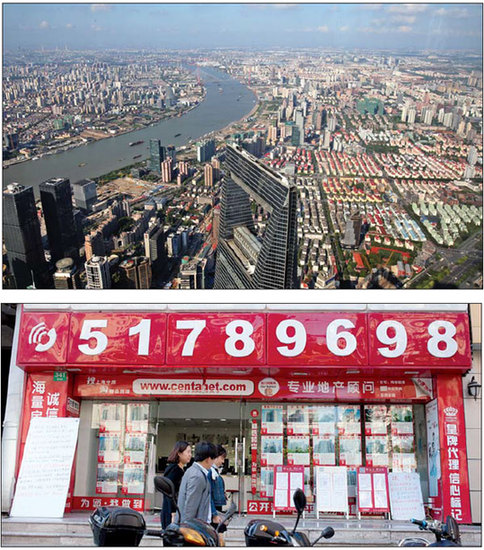
Real estate agencies have been sprouting up all over Shanghai as the property market booms. |
In 2015 the average monthly salary in Shanghai was 5,939 yuan ($860; 810 euros; 707). A dual-income family would have needed to save every single penny for about 20 years to buy a 90-square-meter apartment.
In December the average price of new dwellings in Shanghai was 40,794 yuan per square meter, compared with 39,307 yuan in Beijing and 57,998 yuan in Shenzhen, Guangdong province, according to E-House (China) Holdings.
Chen Lina, an analyst with Shanghai Sinyi Realty Agency and Consulting Co, says those who rent homes even though they can afford to buy one are either expatriates or those who have yet to find an affordable or ideal property.
Zhong Zixuan is one individual who can afford a home but has chosen to rent. Zhong and her husband first shared an apartment with another tenant in the Zhangjiang district of Pudong New Area in Shanghai before relocating to different parts of the city numerous times. The couple and five other family members now rent a 175-square-meter three-bedroom apartment in Jing'an district for which they pay 20,000 yuan a month.?
Zhong says many of her friends and relatives have asked her why she is reluctant to buy an apartment even though she can afford one. She wants to earn even more money so she can afford the ideal home in a central location like Jing'an, she says.
However, these days an increasing number of people choose to rent even though they can afford their dream home. Shu Yi, a marketing director at a local company, says renting a home gives her a sense of freedom. Not being tied down by mortgage payments gives her the opportunity to pursue her interests such as learning French, swimming, going to the gym and going on overseas trips, she says.
Since 2005 Shu has rented an apartment on Jiangsu Road in Changning district. She earns 360,000 yuan a year, so could comfortably buy her current apartment, valued at about 4 million yuan. In fact her friends and family have encouraged her to do just that.
"I don't want to be one of these people, and I am glad I'm renting instead of buying," she says. "I am an independent person, and freedom is the most important thing to me. I do not want to let a mortgage compromise my quality of life.
"I will continue to rent a house for at least another five years. I don't know what will happen then, but I am pretty sure that I will make the decision rationally and always give priority to quality of life."
Central areas
Industry experts say the number of people who think like Shu and Zhong is growing, a consequence of the fact that the price of renting a home is rising more slowly than the price of buying one.
Real estate services provider Savills China Research says that between 2007 and 2015 the average price of new homes in Shanghai more than tripled, from 10,336 yuan per square meter to 32,151 yuan. In the same period, rent for medium- to high-end properties rose a mere 5 percent, from 173.2 yuan per square meter to 181.3 yuan. James Macdonald, head of Savills China, says the annual rent for a two-bedroom apartment in Shanghai is between 1.5 percent and 2 percent of the property's value.
Young professionals working in big cities usually prefer to rent a home in the more central areas of the city to reduce their travel time to work, Macdonald says. Having to buy a home would usually mean having to settle for a property far from the city center where prices are lower.
Zhang Xue, who has rented since she graduated from Shanghai International Studies University seven years ago, prefers to rent close to where she works, cutting her travel time.
"On my salary, I can afford to buy a small apartment in suburban Jiading district that costs about 1 million yuan. But the sacrifice is just too much. I would have to spend at least three hours a day commuting.
"Apart from that, buying the ideal home is an unreachable goal. When I earned 5,000 yuan per month, the price of homes was already too high. Now even though I earn 20,000 yuan a month, the home price is still just as prohibitive."
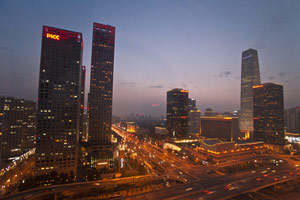
For Sun Yongshi, a student at Communication University of China in Beijing, the decision to rent instead of buy comes down to environmental concerns.
"Because of Beijing's poor air, I would prefer to buy a home in Zhejiang province or my hometown in Jiangsu as an investment," says Sun, a part-time trainee in a bank who rents an apartment.
"But the place where I want to work is Beijing."
Cheng Sun, a Shanghai native now renting a 130 sq m apartment for which he pays 15,000 yuan a month, says rented homes offer flexibility to people like him who travel a lot for work.
"I will probably eventually be traveling between many Chinese cities and even overseas, so renting a home makes more sense. As long as the lease is long enough, I do not see any difference between renting a home and owning one."
Rising mobility
A recent survey conducted by the Chinese online classifieds service 58.com suggested that a significant number of young people in first-tier cities such as Beijing, Shanghai, Guangzhou and Shenzhen live in rented homes.
According to Beijing News, which reported on the survey, 41.69 percent of married couples surveyed said they rent their home, and 60.26 percent of those says they will continue to do so over the next three to five years.
Macdonald of Savills said the rising mobility of white-collar workers in large Chinese cities will result in more people living in rented homes, as happens in many cities elsewhere.
Chen Sheng, president of the China Real Estate Data Academy, says the government should consider adopting policies that provide tenants and homeowners with equal benefits in terms of education and social welfare.
He Wei and Pan Yixuan in Shanghai contributed to the story.
wang_ying@chinadaily.com.cn




Copyright 1995 - . All rights reserved. The content (including but not limited to text, photo, multimedia information, etc) published in this site belongs to China Daily Information Co (CDIC). Without written authorization from CDIC, such content shall not be republished or used in any form. Note: Browsers with 1024*768 or higher resolution are suggested for this site.
License for publishing multimedia online 0108263 Registration Number: 130349