A study published in the renowned British medical journal The Lancet, in October 2015, brought some very good news about improved health and life-expectancy throughout China.
But there was also some worrisome data on the growth of chronic diseases such as diabetes and high blood pressure and such expensive-to-treat diseases as cancers and heart disease.
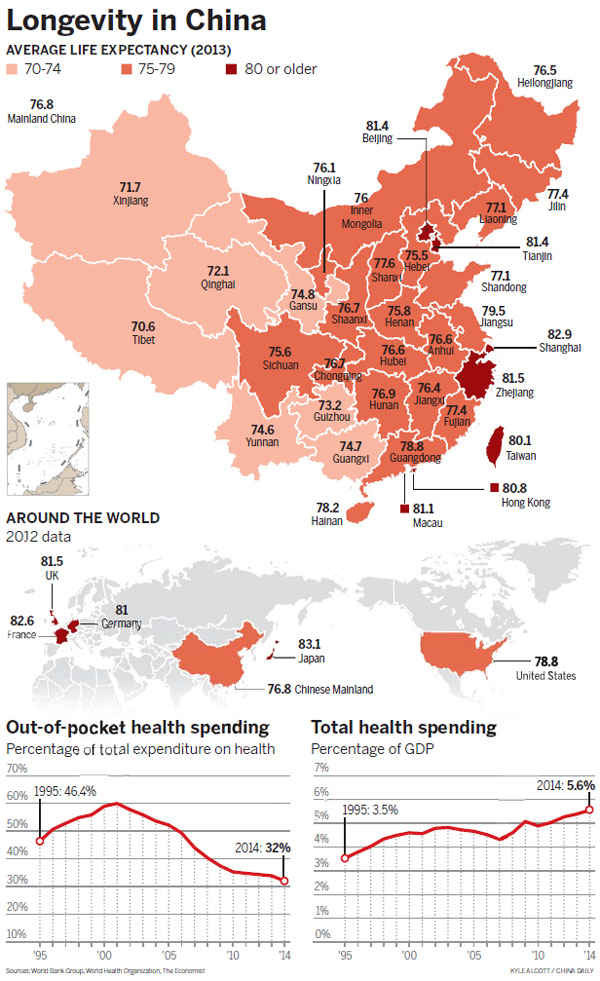
Life expectancy in China increased from 41 years in 1950 to 65 by 1975 and all the way to 77 today, only slightly below the level of the most highly developed countries. According to the Lancet study, 13 of the Chinese mainland's 34 provincial-level regions have life expectancies equal to or better than the 79 years of life that an average United States resident can expect. Despite pollution and despite spending a relatively low percentage of GDP on healthcare, people in Beijing, Tianjin, Shanghai, and Zhejiang province live as long as those of any country in the world.
Less developed provinces and regions started from a very low base, but are moving up fast. From 1990 to 2013, the Tibet autonomous region saw an increase in life expectancy from 55 to 69 years. For Sichuan men, life expectancy increased from 61 to 72. Inland province saw an increase of at least 8 years.
On the other hand, the country is facing what the International Diabetes Federation calls a "fearsome diabetes epidemic."
Starting at less than 5 percent in 2000, 11.6 percent of Chinese adults had diabetes in 2013, according to a report published in the Journal of the American Medical Association. By comparison, about 10.8 percent of American adults and 8 to 9 percent of Europeans are diabetic. An astounding 493.4 million Chinese, almost half the adult population, have pre-diabetes, meaning they now have high blood sugar and are at high risk of becoming diabetics in the future. Without medical intervention, 6 to 11 percent of pre-diabetics get full-blown diabetes each year.
The growth of these chronic diseases puts extreme cost pressure on the healthcare system. According to the IDF, the country spends 355 billion yuan ($51 billion; 48.9 billion euros; 41.6 billion) each year treating diabetes, about one-eighth of total healthcare spending. That does not include the high costs of other chronic diseases.
Little wonder that foreign pharmaceutical companies are investing heavily in diabetes drugs in China. According to FierceBiotech, more than half of total investment focuses on diabetes, which now affects more than 10 percent of Chinese adults. For example, Sanofi is building a production plant in Beijing and is working with the Chinese Diabetes Society to train community doctors. Novo Nordisk is spending $100 million on a diabetes research center in Beijing and is providing training for Chinese doctors. Eli Lilly built a diabetes research center, insulin production plant and packaging center. Merck plans to invest $1.5 billion, including an R&D center in Beijing, employing 600 researchers focusing on vaccines and diabetes.
As President Xi Jinping emphasized in his speech to the National Health Conference in August, 2016, the top priority in the reform is overall health, not just medical care. This involves popularizing healthy living, providing universal health insurance coverage, building a healthy environment, and focusing on the development of a "health industry".
davidblair@chinadaily.com.cn




Copyright 1995 - . All rights reserved. The content (including but not limited to text, photo, multimedia information, etc) published in this site belongs to China Daily Information Co (CDIC). Without written authorization from CDIC, such content shall not be republished or used in any form. Note: Browsers with 1024*768 or higher resolution are suggested for this site.
License for publishing multimedia online 0108263 Registration Number: 130349