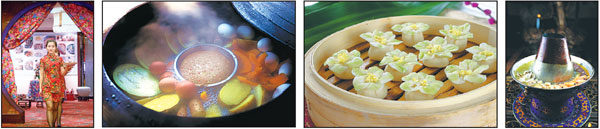
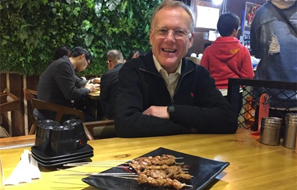
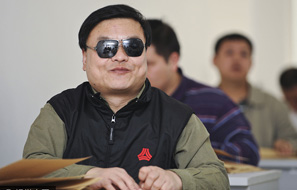
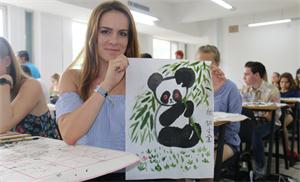
Dishes that bear myriad influences warm the heart in cold Northeast China. Wu Yong reports from Shenyang, Liaoning province.
Spring Festival is here. In Northeast China, where the temperature outdoor reaches -20 C on average during winter, it is also a time when bubbles in soup instantly freeze and look like ice balls. But even so, for tourists, indoor venues are never too cold due to the warmth of the local people and the delicious food.
It is said that diet is closely related to geography, culture and nationality. Northeast China is located outside of the Great Wall, where the Confucian culture, nomadic traditions and the marine spirit blend together. This place has been ruled by Hans, Manchus and Mongols over different periods, turning it into a diverse cultural package.
As the cradle of China's last Qing Dynasty (1644-1911), you can also find royal food that is cooked with fine ingredients and served in luxury tableware.
Here are some simple dishes that taste great.
Pork-pickled cabbage hotpot
Located at the center of the table, the distinctive pot with a tall chimney works like an inverted funnel for the smoke. And the right way to relish this dish is to invite friends to eat it at the start of dinner.
A long time ago, cabbage was the only vegetable option in Northeast China in winter. This is why people viewed this hotpot as a common dish rather than something that is served in state banquets. But the dish made news in June 2016 during German Chancellor Angela Merkel's visit to China, when she reportedly could not resist its temptation.
Following her trip, a smart local hotel even named the dish after Merkel, which its general manager said sold "like a house on fire".
Compared with spicy hotpot from Southwest China's Sichuan province, this one may appear like a simple mix of pork and cabbage. But the sour, shredded cabbage and pork soup together produce a distinctive flavor. Moreover, it has the magical power to warm people coming in from the cold.
Crispy sweet and sour pork
Zheng Xingwen, a Manchu chef, never imagined that he would one day create one of the country's most popular dishes when he came to work for the mayor of Harbin 100 years ago.
The city at the time was one of the most prosperous places in Asia that housed dozens of foreign consulates and financial institutions.
The then-mayor often entertained foreign guests and asked Zheng, his main chef, to improvise on some local dishes. It remains unclear as to how many attempts the chef made before he got something that could please local and westerner palate. The combination of crispy pork cubes in a sweet-and-sour sauce proved just right and made this dish a star.
Laobian dumplings
Dumplings are probably the most representative food of the region, and one of the most famous names in the business is Shenyang Laobian. The brand has been listed as a local intangible cultural heritage and is an attraction for tourists from home and abroad.
Bianfu, its founder, is said to have walked thousand of kilometers from the nearby Hebei province to Liaoning in search of gold during the late Qing dynasty and opened a small reasaurant in Shenyang. His son, Bian Degui, imporved the process in 1870 and eventually people flocked to buy their dumplings.
The birth of Laobian dumplings was possible with the opening up of Northeast China between the late Qing Dynasty and the Republic of China ages, was mostly known for its forest and ranches.
The ingredients for a Laobian dumpling vary according to the season. It uses leek and shrimp in early spring, prawn with pumpkin in summer, pepper and cucumber in fall and cabbage in winter.
Today, Shenyang Laobian is a chain, with stores in cities such as Shijiazhuang, Xi'an, Changchun, Dalian and Beijing. In addition, it runs an outlet in the Japanese city of Sapporo.
Sachima
The name of this classic dessert comes from a Manchu term that means "rice cake with nuts". It is produced by first frying rice noodles and then mixing them with sugar and nuts before stirring them to form a thick pie and cutting them into pieces for eating.
Nurhachi, the first emperor of the Qing Dynasty, is said to have invented the food as military provision during a war with a neighboring kingdom. Experts said that Sacima is rich in calories and easy to preserve, which is in line with the needs of troops at war. After conquering the hearts of the residents of Beijing, the dessert spread to the country's south and evolved into variants.
Ge Xin in Shenyang contributed to the story.
Contact the writer at wuyong@chinadaily.com.
|
Left: Waitresses bring dishes at a restaurant in Shenyang, Liaoning province. Others: Exquisite items served at the Chinese Food Culture Museum, which is located in the same city.Photos Provided To China Daily |




Copyright 1995 - . All rights reserved. The content (including but not limited to text, photo, multimedia information, etc) published in this site belongs to China Daily Information Co (CDIC). Without written authorization from CDIC, such content shall not be republished or used in any form. Note: Browsers with 1024*768 or higher resolution are suggested for this site.
License for publishing multimedia online 0108263 Registration Number: 130349