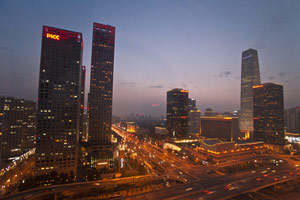
On Saturday, the governments in Beijing, Shanghai, Guangzhou, and Shenzhen released draft rules on car-hailing services to solicit public opinions.
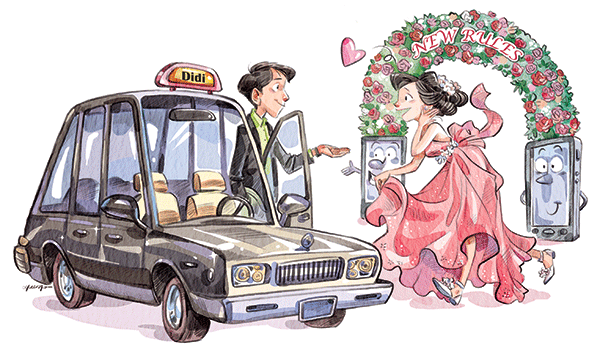
According to the draft rules released by the four first-tier cities, most vehicles endorsed by the ride-sharing platforms such as Didi-Uber will no longer qualify to serve passengers, as the four cities all require drivers to have a local household registration, or hukou, and vehicles above a certain engine displacement if they are providing rides to passengers. Didi has argued that number of available cars would drop significantly should the rules come into effect and the cost of its services may double.
There has already been a chorus of complaints about the hike in fares following the merger between Didi Chuxing and Uber China in August. The top two ride-hailing service providers in China, which are integrating their managerial and technological experience and expertise while maintaining independent branding and business operations, have slashed their subsidies for passengers and raised their charges during rush hours, particularly in Beijing and Shenzhen.
The fare hikes by Didi and Uber, however, are not just a result of their merger. The two companies have been spending billions of dollars subsidizing their drivers and passengers as they rivaled each other for dominance in the market, and both were losing money hand over fist.
In fact, all the ride-hailing companies have adopted the strategy of spending heavily on entering the market in a bid to gain a significant share of what they believe will be a gold mine. In particular, they have offered high incentives to attract more drivers, even though there was a risk they would be punished for illegally engaging in the ride-sharing business. The car-hailing services will be formally legalized on Nov 1.
That, to a point, explains why Didi offered to "reimburse" the penalties its drivers received before the car-hailing services are legalized, even though this means it has been endorsing an illegal activity.
To compete with the new behemoth, other ride-sharing companies such as Yidao Yongche and Shenzhou Zhuanche are continuing to provide subsidies to drivers and passengers, adding more uncertainties to the competition. Yidao has relaunched its "top-up" compensation, which grants passengers a bonus of the same amount of credits as they top up, while Shenzhou has promised not to take a share of its drivers' earnings.
Yet many fear the merger between the two largest companies Didi and Uber will create a monopoly that will continually push up fares. The Ministry of Commerce has said it is investigating whether the merger would create a monopoly as together Didi and Uber account for more than 90 percent of the market.
However, the truth is, the emerging market is pyramid-shaped, meaning better services are offered to those who pay more. The new national regulation on the ride-hailing industry has endorsed this "differentiated operation", which means the costs for a ride via Didi or Uber China will vary according to people's demands.
In metropolises such as Beijing and Shanghai, the provision of public transport lags behind demand, and private capital and internet-based technologies are coming together to meet people's needs. Instead of regulating the industry so it is essentially managed like the traditional taxi industry, local governments should welcome the approach of Internet Plus transportation, because it not only creates employment, but is also prompting changes to the traditional taxi industry and collecting data, such as when and where passengers require a ride, for the urban management authorities, so they can improve public transport to meet people's needs in the long run.
Zhu Wei is deputy director of the Communication Law Center at China University of Political Science and Law. The article is an excerpt from his interview with China Daily's Cui Shoufeng.
 |
| LI MIN/CHINA DAILY |




Copyright 1995 - . All rights reserved. The content (including but not limited to text, photo, multimedia information, etc) published in this site belongs to China Daily Information Co (CDIC). Without written authorization from CDIC, such content shall not be republished or used in any form. Note: Browsers with 1024*768 or higher resolution are suggested for this site.
License for publishing multimedia online 0108263 Registration Number: 130349