|
|||

|
|||
|
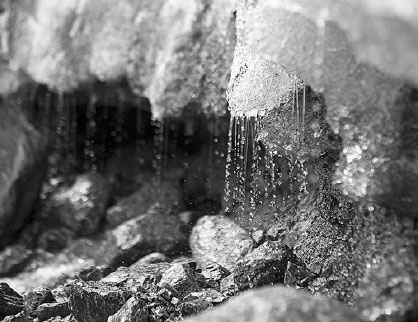
Glacial melt at Glacier No 1 in the Tianshan Mountains has increased over the past few decades. Jiang Wenyao / Xinhua |
Northwest China's Xinjiang Uygur autonomous region will ban tourists from entering a 22,000 square kilometer glacier protection zone in the Tianshan Mountains.
"Glacier tourism brought in revenue of less than one billion yuan ($152 million) over the past dozen years, but the loss from shrinking glaciers is incalculable," Li Jidong from the regional tourism administration was quoted as saying by Xinhua News Agency.
Li cited tourism, manufacturing, mining, vehicle emissions and grazing as additional reasons - besides climate change - that had caused accelerated glacier retreat in recent decades.
"We will ban glacier tourism by 2020 and propose replacing the existing facilities with holiday resorts so that people can observe glaciers from afar," Hong Kong-based South China Morning Post quoted Li as saying.
In April 2014, the regional government set up a 948 sq km protection zone at Glacier No 1 in the Tianshan Mountains, 120 km from the regional capital of Urumqi. Yet the measure proved ineffective as travelers still visited the zone on their own, without the help of travel agencies.
In a visit to the protection zone, China Daily found seven herdsman families setting up private checkpoints to charge entrance fees. After receiving the money, the herdsmen opened the gate to let tourists drive to the foot of the mountain and climb onto the glacier.
Many tourists leave garbage such as empty bottles and plastic bags after camping on the mountain.
"Climate change is the primary cause of glaciers retreating. However, the influence of tourism, grazing and mining has also exerted an influence on Glacier No 1," said Li Zhongqin, director of the Tianshan Mountains Glacier Observation Station under the Chinese Academy of Sciences.
"Now, the melting is speeding up. I hope authorities can implement the new regulations as soon as possible to protect the glaciers."
An earlier Xinhua report showed that the 4.8 million-year-old Glacier No 1 had shrunk from 1.95 sq km in 1962 to 1.62 sq km in 2014 and is retreating by up to eight meters a year.
Other mountains in Xinjiang have experienced the same trend.
In recent years, melting glaciers have accounted for 25 to 30 percent of surface runoff in Xinjiang, and resulted in an in creased risk of natural disasters.
On May 5, a glacial slide in Akto county of the Kizilsu Kirghiz autonomous prefecture damaged 1,000 hectares of meadow and 70 farmhouses. "From remote sensing images, we found that two weeks of snowfall at the north side of Kongur Tiube glacier caused the collapse. Such drastic glacier movement is very rare in the history of Xinjiang, and we should take it as a warning from nature," Li said.
Kongur Tiube, which means "the mountain with a white cap" in the local language, is the second highest peak of Western Kunlun with an elevation of 7,530 meters.
Contact the writers atmaoweihua@chinadaily.com.cn