|
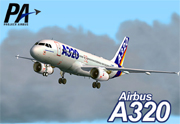
"Your A300 is a good plane but you'll never make it. You are nice people, but it's difficult to have faith in your cooperative program."
That is how Frank Kolk, the technical director of American Airlines and a strong supporter of the twin-engine wide-body formula, reacted to an Airbus presentation in the early '70s.
He knew that creating a truly credible new multinational force in the aerospace industry required just as much innovation as developing a new breed of aircraft.
To turn the cultural diversity that had created so many problems in the past into a competitive advantage was the challenge.
"Our worst enemies are national egos," said Airbus Director General Roger Beteille. Thanks to a small multinational group of leaders such as Henri Ziegler, Franz Joseph Stauss, Roger Beteille and Felix Kracht, an Airbus culture emerged that transcended national bias.
Today Airbus has become a global enterprise with facilities around the world including China to Russia, India and the United States. Its supply chain extends over some 80 countries and regions.
Multicultural Airbus teams ensure that the company is well placed to understand the needs of customers, suppliers and industry stakeholders across the world and to capitalize on the opportunities that these needs create.
But that was not been built overnight. "Cooperation is a real job and it takes time to learn it," Airbus Industrial Director Felix Kracht said in the '70s.
As he anticipated, the Airbus team had to learn how to work together and to listen to one another. Over the years the group developed new technologies that are now becoming world standards but also new industrial processes and innovative managerial organizations to foster European cooperation.
When Airbus started there was virtually no way to create a European joint venture company that would protect the interests of partners and give a strong long-term guarantees to customers.
For the first time in the aerospace industry Airbus used the GIE (Economic Interest Grouping) formula, a legal arrangement that permitted the company to centralize marketing, sales, engineering, flight testing and support, so customers had only one interface and partners were able to retain control over finances and industrial facilities.
The GIE based in Toulouse, France has been the focal point of the Airbus cooperative adventure for three decades. By the turn of the century, Airbus had become a well-established industry leader. It was delivering to the world market an extended range of aircraft. On its side was the European Union that had made significant progress toward integration and harmonization of laws and regulations. It was time for Airbus to go a step further and to form a truly integrated European multinational company.
It was clear to all Airbus partners that creating an integrated company to coordinate the industrial facilities of Airbus across France, Germany, UK and Spain was a prerequisite for the planned ultra-high capacity aircraft project A3XX. In 2000 an integrated Airbus company and the A380 project were launched together.
That decisive step harmonized various units and allowed Airbus to set up new common working standards and tools throughout the company and its main suppliers in Europe.
Airbus built on its ability to draw on the best that Europe had to offer and used its vast experience to create a global enterprise to bring together the best from around the world.
In recent years, Airbus has established centers in the United States, China, India and Russia. Even more important, aircraft company began tapping the pool of hundreds of thousands young engineering graduates trained in emerging countries to complement its existing teams.
At a time when manufacturers realize the value of a multinational, multicultural organization, Airbus, with the longest trans-cultural experience in the industry, is again adopting innovative ways to boost cooperation worldwide for the long term. Building its global network of talent will continue the work of its pioneers and contribute to developing new innovations that will become tomorrow's standards.
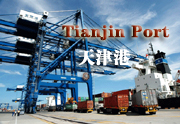
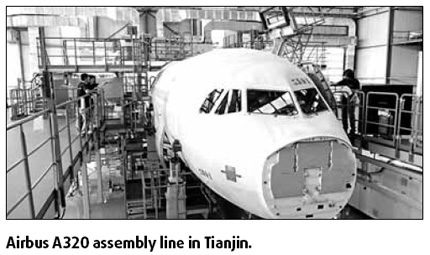
Exactly 40 years after its creation, Airbus delivered its first aircraft assembled outside Europe in Tianjin, China - the most symbolic and visible aspect of the Airbus internationalization as well as the Airbus spirit. Now employing some 52,000 people from more than 80 nationalities, Airbus has been able to integrate cultural diversity to become a world leader inspired by a common vision: "New Standards. Together."
(China Daily 09/23/2009 page14) |