



History of Small Kunshan Mountain2012-05-23
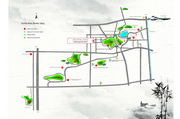
Xiaokun Mountain is at the southernmost tip of the nine peaks. It is 54.3m above sea level. Its circumference is 1.5km and area is about 33.3ha. When looking over it, it is like an inverted basin in a shape of "8". When seen from distance, it is like a lying ox.
History of Phoenix Mountain2012-05-23
With Tongbo to the east, Yuping (Xueshan Mountain) to the west, Sheshan Mountain to the south and Beigan to the north, Phoenix Mountain is 51.1m above sea level. Its area is about 26.6ha. It got its name because it looks like a flying phoenix.
History of Chenshan Mountain2012-05-23
It is about 2km southwest of Sheshan Mountain. To its east is Chenshan Pond. At its southern foot lies the old Chenshan town. The mountain is 69.8m above sea level. Its area is about 20ha.
History of Hengyun Mountain2012-05-23
Also known as Hengshan Mountain, it is to the north of Xiaokun Mountain and south of Tianma Mountain and about 2km from Jishan Mountain. It is 68m above sea level and covers about 53.3ha of land.
History of Xueshan Mountain2012-05-23
With East Sheshan Mountain to its south and Phoenix Mountain to its south, the mountain is 74.1m above sea level. Its circumference is about 1.5km. Its area is about 26.6ha.
History of Jishan Mountain2012-05-23
With Tianma Mountain to its east, Jishan Mountain is 38.9m above sea level and covers about 7ha of land. It is named after Lu Ji, a famous writer in the Western Jin Dynasty (AD 265~316).
Legend-Four Righteous Monks Pagoda2012-05-21
During the reign of Emperor Jiajing in the Ming Dynasty (AD 1522~1566), Japanese pirates often invaded China's southeastern coast and plundered and did harm to local people. Today's Congming, Songjiang, Qingpu and Jiading all suffered from the intrusion of Japanese pirates.
Legend-Ancient Guangfulin Town2012-05-21
On the eastern bank of Chenshan Pond, there is a 500m long street stretching from east to west. The traces of an ancient town are dimly visible. According to historical records, people settled in Guangfulin more than 4,000 years ago.
Legend-Decade's ups and downs2012-05-21
At the southern foot of the East Sheshan Mountain and on the northern bank of the Shanqian River, there was a small street stretching more than 600m from west to east.
Legend-Divine Tiger's Den2012-05-21
According to legend, during the reign of Emperor Zhizheng in the Yuan Dynasty (around AD 1277), an eminent monk called Ming Beng, also known as Monk Zhong Feng came to the Xiaokun Mountain and advocated Buddhism in the Sizhou Pagoda Complex. More than 500 people listened to his preaching.
Copyright ?
China Daily All Rights Reserved, Constructed by China Daily
Official Website of the Sheshan National Tourist Resort, Shanghai
Official Website of the Sheshan National Tourist Resort, Shanghai